VIFF 2021 JOURNAL – DRIVE MY CAR

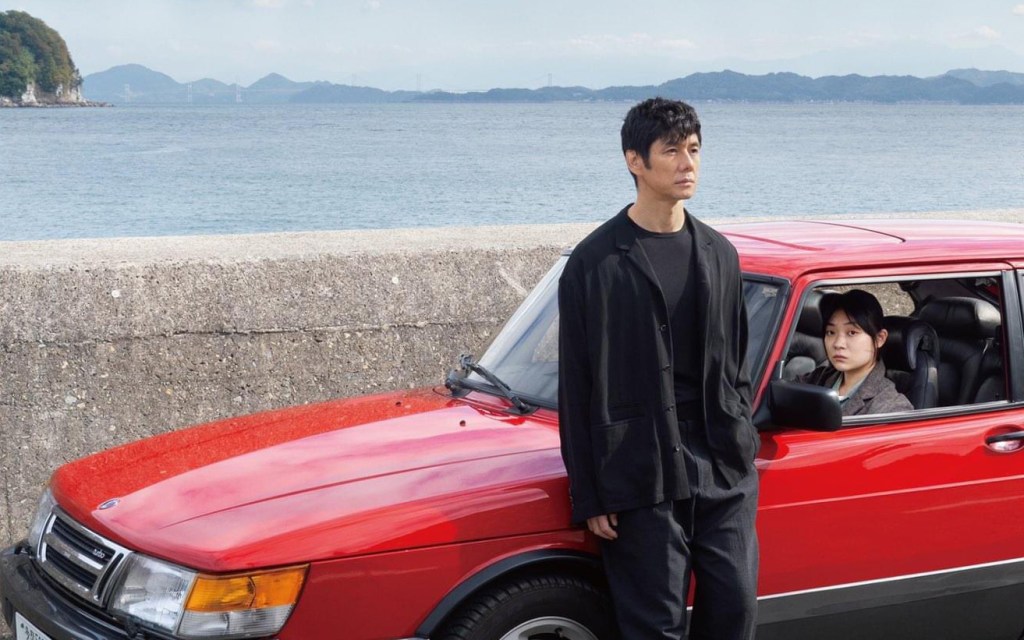
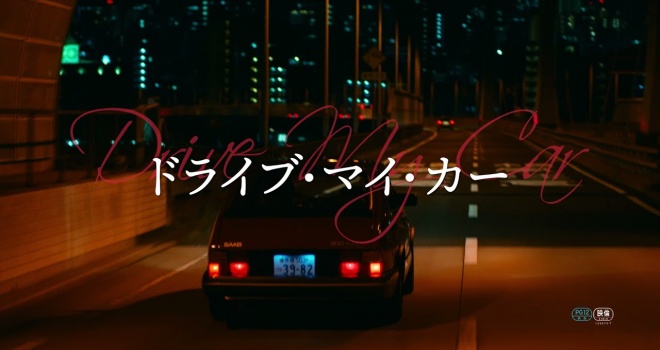
Le film Drive my Car avec l'actrice Miura Tōko et l'acteur Nishijima  Hidetoshi se dévoile dans le premier teaser - Icotaku

Monday Oct. 4th was a big day. I woke up with a full itinerary in mind. First I had to work a shift in the afternoon at a bar across town. Next I would bus to my father’s house to watch as much of the Los Angeles Chargers Monday Night Football game as I could before I would take a train downtown to see Ryusuke Hamaguchi’s three hour opus DRIVE MY CAR at 8:45PM. My most anticipated film of the fest. It was to be a long, full day.

You have to understand that the Chargers are to me more than just a football team that I root for. From as far back as I can remember, The Chargers were everything in my household, as close to a religion as anything. My dad was a fanatic and made sure to dress me in the blue with gold lightning bolts right away. I had a tiny #55 Seau jersey and a poster on the wall. I remember crying my eyes out when we lost the 95′ Super Bowl to the 49ers. I didn’t get to watch that game with my dad. I was too young to join, but I did watch him dye his hair blue and shave yellow lightning bolts into the side of his head the day before the big game. Our relationship went through some rocky periods, but in my teen years, we reconnected and became best friends and artistic collaborators. When he decided to move from Thunder Bay to Vancouver, I was right behind him a year later, as soon as I graduated from High School. The first night we spent together in Vancouver, we saw Bertolucci’s Il Conformista at the Pacific Cinematheque. The next night we went to a football game.

On Monday morning, as I commuted to work, I received a phone call from my dad. He wouldn’t be able to watch the Chargers game that night. He’s going to be in the hospital for a surgery. My father has been sick for years. A chronic liver disease that has been sucking the life out of him and only just 1 month ago, was he finally sick enough to be placed on the organ transplant list. His condition of late has been so poor, that we didn’t know if he would make it through the year, let alone the football season. This news on the phone was a blessing and something we’ve been anxiously anticipating for much too long. I told him I love him and before we hung up, we both said “Go Chargers!”

Of course, I was overwhelmed with emotions for the rest of the day. Fear and relief in equal measures. I cried on the phone to my wife, but was determined to go to work my shift, watch the game and get to the film screening. I called a couple friends and asked them to join me at a bar around the corner from the theatre. Those two lovely souls came through for me. Arriving at the bar, after work, the game was delayed half an hour due to lightning storms. Any Charger fan will tell you that a lightning storm is a good sign. We feed off of the lightning. We become the lightning.

The final score was 28-14 for the good guys. We dismantled the rival Las Vegas Raiders and left the field victorious and the #1 seed in the AFC. When the game finished, I bolted over to the Playhouse to settle in and watch something special. Forgive me for all of this backstory, but it needs to be laid out to explain why I couldn’t “review” this film and instead will call this a “Journal” to account for the amount of myself that I brought into that film screening. My thoughts on Drive My Car follow below:

Drive My Car follows Yusuke Kafuku a theatre actor/director. His wife, Oto is a screenwriter. When we first meet Yusuke, he is driving around in his red SAAB 900, rehearsing his lines for his role as Uncle Vanya, with a cassette tape of the whole script minus his part, recorded for him by his wife.

I grew up in the theatre. My father was an actor and producer and eventually director of small, hard hitting stage productions and I was there for a lot of it. One of my earliest memories of this involves sitting in the passenger seat of his red Mercury, as he practiced lines with a tape he had recorded for his role in a production of Chekhov’s Cherry Orchard. You can now understand my difficulty in reviewing this film from an objective viewpoint.

With that being said, I don’t think there could be a film more tailor-made for the situation I was in than Drive My Car. A heartbreaking, melancholic and life affirming tale about loss and grief, about art and the power of language. The power of storytelling. It fits perfectly into Hamaguchi’s body of work and is even better than The Wheel of Fortune and Fate, which was my favourite film of 2021 up until now. It also works as a deep and profound adaptation and extrapolation of a Haruki Murakami short story. It’s Hamaguchi’s most beautiful film and features gorgeous views of parts of Japan that I long to visit when my wife and I finally get a chance to visit her family again.

I’m writing this while enroute to Vancouver General Hospital to see my dad in the ICU. His operation was a success and while I think he will be too sedated to read this for a few days, I want to have it here and ready for him when he is able to.

My dad has always said “just one Superbowl before I die.” As a child it seemed inevitable, but recent years have felt like they were do or die. This transplant has bought him more time and I couldn’t be more grateful to the doctors who performed the surgery, the nurses taking care of him and the person, whoever they were, who passed yesterday to save my father’s life. We are eternally in your debt. Maybe now we can see Justin Herbert and the Chargers win a Superbowl. Maybe I can sit down one day and watch Drive My Car with my dad and remember those years we spent creating beautiful art on stage together. Maybe we can even work on a project together again.

Go Chargers.

VIFF 2021 REVIEW – FATHER PABLO

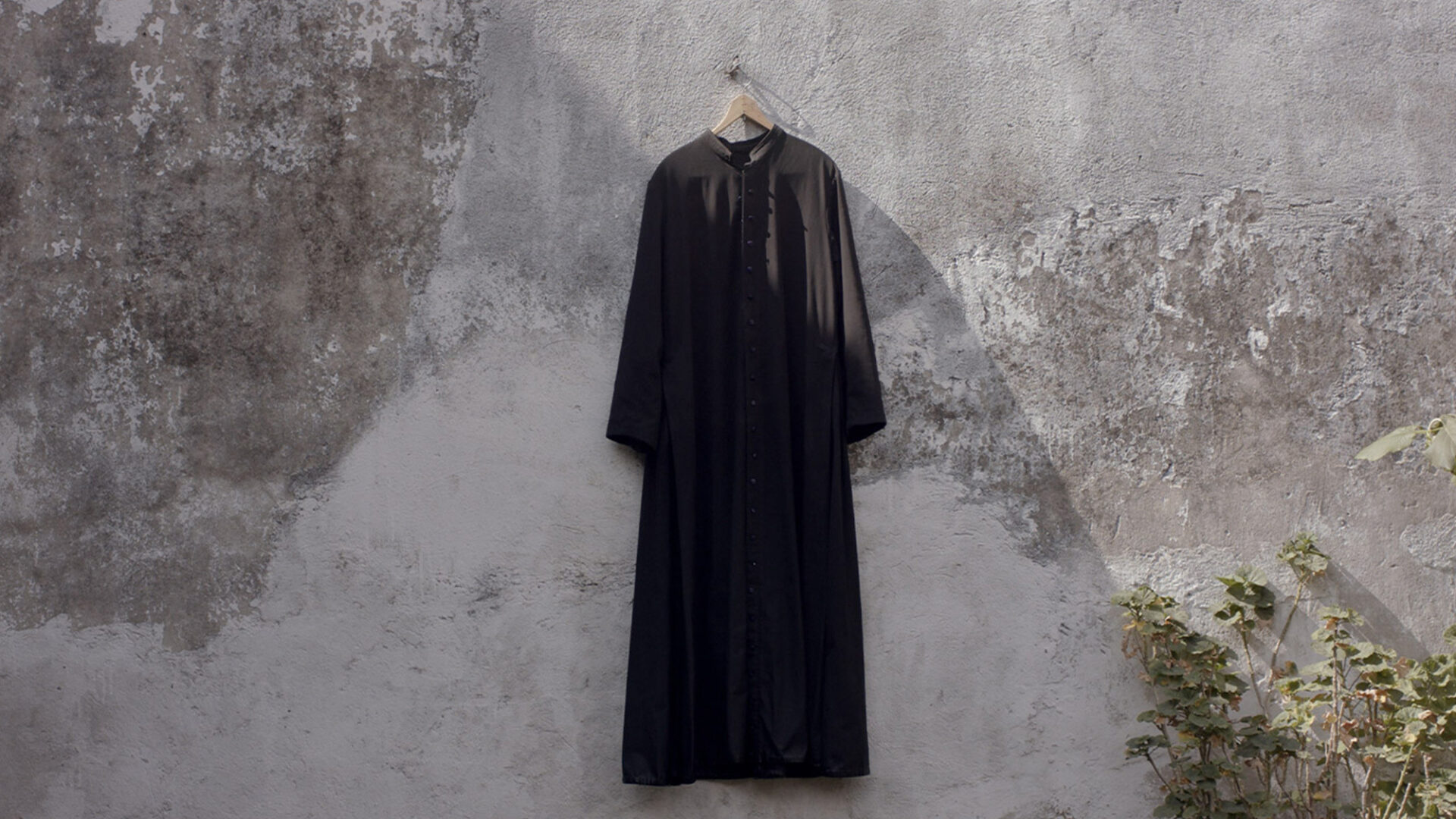
Father Pablo web1

We meet Father Pablo (Rafael Martínez Sánchez) in the middle of a D&D session with some fellow clergy. The group has arrived at a mysterious lake and all signs lead to the obvious next step of jumping into the lake, when the initiative arrives to Father Pablo who decides to use his turn to set up camp, much to the disappointment of his fellow adventurers. The DM describes a lousy, sleepless night and moves play onto the next guy who steps into the lake and continues the curious journey. To call Father Pablo a buzzkill would be putting it lightly. It’s a testament to the skill of first-time director José Luis Isoard Arrubarrena that we grow to love Pablo in spite of his personal shortcomings.

A novice, laptop priest who is essentially a white-collared accountant for the Catholic church, Father Pablo is deeply attached to the rules and regulations of the word of God. He spends much of his time isolated from the rest of the world and seems to be stuck in a different era, constantly at odds with the modern world outside the church walls. When his sister comes to visit him, in his small, plain room and tells him that he needs to visit his father, because he will be dying soon, he begrudgingly decides to visit the family ranch where his dying poet father Manolo (Juan Ignacio Aranda) resides.

Manolo is an angry man. Sick and bloated from a poet’s life of drinking, he’s confined to a bed, completely paralyzed. Propped up on one side, as his long-time nurse Esmerelda removes his sweater, he tells his son from his death bed, “This is my greatest existential defeat. That you became a priest.” It’s a moment that is both funny and painfully cruel, and serves to inform the distance and lack of understanding that defines this father-son relationship.

On the outside Pablo seems relatively stable and sure of himself, but as we spend more time with him we start to see the cracks in his façade. It becomes evident that his dedication to the laws of the bible come from a place of desperation and fear, and the isolation he feels is partly his own creation. He soon learns from Esmerelda that his father is intending to end his own life with her help, but they first need Pablo to hear her confession and grant her forgiveness before she is willing to go through with it. This causes an unresolvable conflict with Pablo, who could not fathom such an act. He contacts his superior via Zoom to ask for advice. Pablo ends up hiding in his room, avoiding his father as much as possible. Some cousins arrive at the ranch to visit, party and say goodbye to their uncle. Pablo’s total lack of charisma denies any potential human connections and an awkward social scene, one night, leads to Pablo betraying himself and taking out his guilt on the other guests.

Director Arrubarrena shows terrific restraint in his debut film. Long, still shots, sometimes in the almost pitch dark allow his actors to move at their own pace and fully inhabit the setting. It’s hard to say why Pablo is the way he is, but in spite of his hardheaded temperament and lack of people skills, we grow to feel his pain and understand his fears. Father Pablo hit home for me in many ways.

This is a slow moving, but thoughtful and profound film. There are no emotional crescendos or heart wrenching confessionals. There is a confession scene, to be fair. It takes place on a webcam and the priest’s reply is an important piece of advice that should ring true to anyone who has been in Pablo’s position. Pablo follows through with the advice, speaking to his father, his face bathed in the light of his iPhone, his father listens silently. The final moments of the film are hidden from Pablo, but the audience is provided that moment of forgiveness and release that he is unable to afford himself.

VIFF 2021 – Sneak Preview II

VIFF 2021 starts tomorrow and I couldn’t be more excited! Here are a few more films that I’m looking forward to seeing over the next 11 days.

NIGHT RAIDERS – DANIS GOULET

Danis Goulet on Toronto's 'Night Raiders,' Indigenous film community -  Variety

Those that have followed my humble blog will know that I’ve made no secret about my adoration for the work of Elle-Máijá Tailfeathers. Her 2019 film The Body Remembers When the World Broke Open was far and away my favourite film of that year (I saw it in the theatre with a loved one or two SEVEN times) and her 2020 Documentary Kímmapiiyipitssini: The Meaning of Empathy is devastating and illuminative and is a must-see for all Canadians. Elle-Máijá stars as Niska in Danis Goulet’s Night Raiders, a post-apocalyptic sci-fi with its focus on Canada’s dark colonial history and the future potential of repeated transgressions. Today (September 30th, 2021) marks the first National Day for Truth and Reconciliation and it is more important than ever that we take time to reflect on our history as a country and go forward listening, learning and taking action to correct our past and fight collectively for the change we need. Night Raiders presents a future scenario in which nothing changes. It’s 2044. Niska, a Cree woman, joins a resistance force in order to save her daughter from a military-occupied country that has taken children as property and interned them in reeducation camps. It’s not hard to draw lines between this frightening future and the despairing history of the lands occupied by Canadian settlers. I have been anticipating this film since its shooting in 2019 and with the discovery of over 6500 unmarked graves of Indigenous children, the message of this film has never been more important. Here we have an incredibly topical and fundamental story that sheds some light on the darkest corners of Canadian history. I’m guessing this, along with the rest of Elle-Máijá’s work, will be essential viewing for all Canadians in the near future.

RED ROCKET – SEAN BAKER

Red Rocket' Review: Simon Rex's Big Comeback Role - Variety

It’s hard to follow something like Night Raiders with a film about a washed-up porn star returning to his hometown where nobody wants to see him, but in the spirit of film festivals, I’m going to take some sharp turns here. Sean Baker is certainly a director to watch. His first two features, Tangerine and The Florida Project were thoughtful, empathetic and understanding looks at underrepresented people living on the margins. His filmmaking style is kinetic and unhinged, as he matches the unbridled energy of his non-professional actors. Sometimes Baker’s films are so intense, that it’s a miracle to behold how much grace and beauty he is able to find amidst all the chaos on screen. I don’t know much more beyond the basic synopsis of Red Rocket, but there has been some considerable hype around the lead performance from former MTV VJ Simon Rex. Sean Baker is one of the more exciting directors working in USA and this seems to be a continuation of that success.

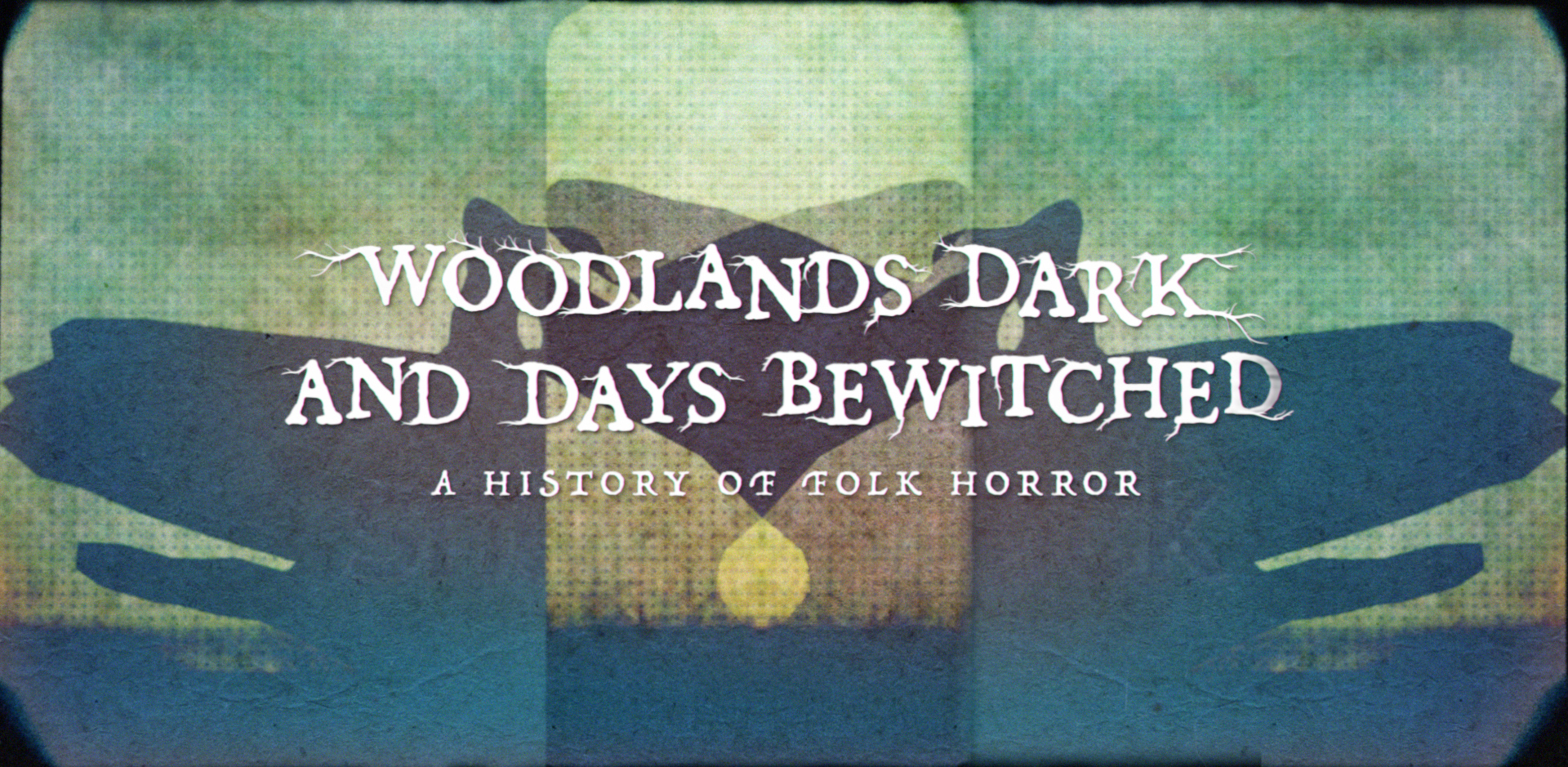
WOODLANDS DARK AND DAYS BEWITCHED – A HISTORY OF FOLK HORROR – KIER-LA JANISSE

I actually got to watch this film in the summer when it premiered at Fantasia Film Festival in Montreal. A three-hour documentary that is so well paced and informative, that not a minute of it’s runtime is wasted. Kier-La is a warrior of horror cinema, who got her start in Vancouver and has gone on to produce some incredible and seminal books on horror, and now has written a visual bible on the history of the Folk Horror genre. A who’s who lineup of interviews with cinema greats and a meticulously researched and edited selection of films that run the gamut from well-known to obscure, classic to contemporary. Kier-La traces the entire timeline of Folk-Horror and follows it around the globe. The approach is reminiscent of the work of Mark Cousins and like his long form documentaries, Woodlands Dark makes is just as easy to let yourself go and sink into the flood of images and information. I had a chance to chat with Kier-La virtually during the closing night at Fantasia and all her stories indicate that this was a painstaking and meticulous labour of love that depended on a lot of elements falling into place. There’s no denying that Kier-la adores these films and is fully committed to sharing and educating in an entertaining and meaningful way. I highly recommend watching this one with a pen and paper, as every minute offers up another film that you likely haven’t heard of, but will want to find when this doc closes and it’s time to venture out on your own. It’s also worth mentioning that Woodlands Dark will be getting an incredible Box-Set release through Severin Films that will not only feature the documentary, but also 19 Fully restored classics that are featured. There are some really cool selections and the packaging is gorgeous. Definitely worth checking out HERE if you have any interest in Folk Horror.

That’s it for my VIFF 2021 Previews. I am working on a review for a film that I should publish in the first couple days of the festival. Thanks for reading!

VIFF 2021 – Sneak Preview I

Another trip around the sun, the floodgates have opened, the cinema is returning and pretty soon we will be awash in glorious films from around the globe! VIFF 2021 will be another hybrid festival with both online and in-person screenings. I perused the program and wrote down some of my most anticipated films of the year that will be screening at this installment of VIFF. Here is a quick look at a half dozen In-Person Screened films that I’m excited about!

DRIVE MY CAR – RYUSUKE HAMAGUCHI

Hands down my most anticipated film of 2021 is the second feature of the year from Ryusuke Hamaguchi, who is quickly becoming one of my favourite filmmakers of the moment. An adaptation of a short story by Haruki Murakami that clocks in at nearly three hours. Hamaguchi is no stranger to films with long runtimes, his 2015 Happy Hour was a small scale epic that ran for over FIVE hours and not a moment was wasted. Happy Hour was one of my favourite films of the decade and I’ve now seen it three times! (I regretfully left it off my 2010s top 20, but it would easily slot into the top 5, if I were to revisit that list.) The combo of Hamaguchi and Murakami was more than enough to excite me, but once the film won Best Screenplay at Cannes, I knew it would be incredible. The Screenplay prize at Cannes is a strong indicator of great filmmaking that takes chances and hits hard. Hamaguchi’s earlier film from 2021, The Wheel of Fortune and Fate won the Silver Bear Grand Jury Prize at Berlin and is probably my favourite film of the year, thus far. I’ve been counting down to the fest specifically in hopes of seeing this movie!

IN FRONT OF YOUR FACE – HONG SANG-SOO

Hong Sang-Soo. What more do I need to say? You don’t have to dig through my blog for very long to see that I absolutely worship the films of Hong and with every passing year, my anticipation for his next couple of films only seems to grow. A filmography that retreads and revisits itself with each new piece, In Front of Your Face looks to be a bit of a detour from what we can usually expect in the South Korean master’s films, though I’m sure there will be plenty of familiar touches, as is to be expected in a Hong Sang-Soo film. I honestly don’t know anything about the plot of this film, but as I have established, over the course of these reviews, I really don’t need to see it to know that I will love this movie.

MEMORIA – APITCHAPONG WEERASETHAKUL

The English-Language debut from Thailand’s greatest filmmaker. Apitchapong Weerasethakul has been mystifying audiences with his unique brand of cinema for over two decades, now. On top of having perhaps the most unapproachable name pronunciation in the modern art world, his work is equally regarded for its bewildering style and esoteric POV. To watch a Weerasethakul film is to have an experience. A visual, auditory, psychedelic, out-of-body type experience that depends as much on the lush sound design as it does its story and characters. Here we have Tilda Swinton (The actress of this generation, no doubt.) in a lead role that finds her in Columbia, a Scottish expat, farming Orchids. While visiting her sister in Bogota, she is awoken by a mysterious, loud bang, the unknown origin of which sets her on a quest to discover or explain the haunting sound. As is the case with all of the director’s films, things seem to progress in a mysterious and perplexing fashion that is to be expected. Co-Winner of the Grand Jury Prize at Cannes, there’s no reason to miss seeing this singular cinematic experience in a theatre!

VIFF 2020 – Moving On

The directorial debut from Korean director Yoon Dan-Bi is a stunning, sensitive portrayal of a family in transition. Okju lives with her father and younger brother and we meet them as they are packing into their van and leaving their apartment in the city. The camera leads them out of their neighbourhood amidst streets cluttered with unwanted furniture and trash.

They are moving out to the countryside to care for their grandfather, who spends his days alone, watering his garden in silence. Okju and her brother learn to adjust to their new surroundings, while Okju struggles with the complications of growing into a woman without her estranged mother. Eventually Okju’s aunt joins the family for the summer and plans are made for what to do with Grandpa and his home. It becomes apparent to Okju that she won’t be returning to her home in the city after the summer, causing more strain on their tenuous family ties.

Full of lived-in, nostalgic detail, Moving On has drawn comparisons to some of the greatest Asian family dramas. Yoon is obviously a cinephile and she doesn’t shy away from visually referencing Yasujiro Ozu or Edward Yang. Often this can come off as empty homage, but Yoon backs these aesthetics up with the deep understanding and love for her characters and their interpersonal relationships that those masters were known for. It’s hard to ignore the connections to a film like Yi Yi, but that she can assimilate such a specific film language and make it all her own shows a level of restraint rarely seen from first time directors.

A heart wrenching study of intergenerational dynamics and the long term effects caused by the absence of a loved one. Moving On is filled with an immense sadness about the transient nature of life, but the specifics of a lived experience and the understanding that things can and do change for the better show us that even the most painful moments of life can be positive and essential experiences through the lens of hindsight.

There is a sequence in the final act that transcends the boundaries of everything that came before and asks us to question our own concepts of fantasy and reality. Yoon draws very little attention to this moment, but it is a masterstroke in what is undoubtedly one of my favourite films of the year and one of the best directorial debuts in recent memory.

VIFF 2020 – Lapsis

Ray is a middle aged man down on his luck and struggling to take care of his younger brother who is suffering from a mysterious condition called “Omnia,” that leaves him fatigued and despondent. Desperate to make some money to pay for a questionable treatment, Ray takes on a job for a cabling company and sets out into a bizarro, sci-fi version of the modern day gig economy.

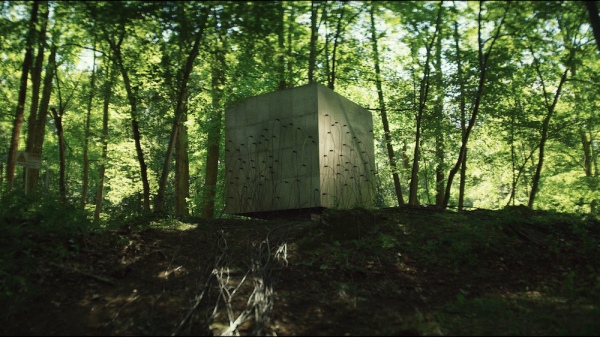
Armed with GPS “Medallions” and carts loaded with cable, hundreds of people crisscross through a forest, laying cable between large metal boxes that run the quantum computing network. With their handheld device, routes are bid on, a pace is set and breaks are handed out infrequently. Ray discovers is he able to make decent money, despite the strenuous work and seems to fall in with the rest of the cabling community, mostly young people setting up camps and sharing conspiracy theories.

Eventually the circumstances through which Ray acquires his medallion come back to haunt him and he finds himself part of a grassroots organization to fight back against the CBLR corporation. I’ll admit that the film starts to lose it’s way in the final act, and perhaps the message is a bit on the nose, but the central performance by Dean Imperial grounds the film and helps to maintain the absurd, DIY tone. The relationship between the fantastic and realistic is really important here and as you grow accustomed to the strange rules of this not-so-distant future you realize that the world we live in is essentially the same.

The social commentary of Ken Loach through the lens of a slacker-indie film like Joel Potrykus’ Buzzard, with a surprisingly effective low-budget science fiction approach; Lapsis is a fun and promising debut and I look forward to whatever Noah Hutton comes up with next.

VIFF 2020 – Caught in the Net

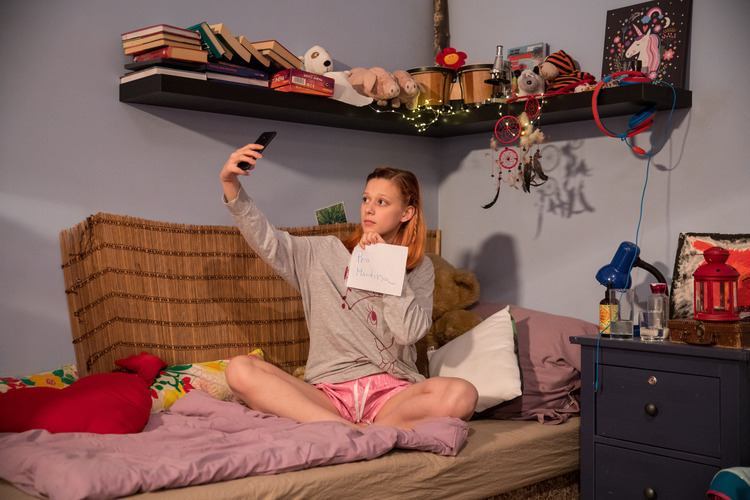
In an attempt to study the methods used by sexual predators on the internet, a pair of Czech filmmakers cast three young adult women who have the appearance of 12-year old girls, sit them down for ten days in front of a webcam in a facsimile of their childhood bedrooms and record their conversations with countless men online.

This is the kind of dark concept you might see in a confrontational American reality show. The idea is so absurd, it could be confused as an episode of Nathan for You. The filmmakers enter the experiment with promising goals, trained professionals and a strict code of conduct to limit the ethical implications of the project.

The following 90 minutes is about as icky as you can imagine. Knowing that the actresses are well into their adulthood doesn’t help to make the experience less discomforting. The filmmakers employ a unique blurring technique to protect the identity of the men who approach the girls to chat. Their faces are blurry and nondescript, but their eyes and their mouths are crystal clear and their gaze almost penetrates the computer screen we see them on. The effect is extremely unsettling.

There isn’t a lot of joy to hold onto here. It ultimately boils down to a series of creepy, older men requesting nude photos, sending nude photos and masturbating (sometimes in secret, sometimes out in the open). The girls are constantly bombarded with requests from anonymous men (over 2400 in ten days!?!?!) and despite leading every conversation off by underlining the fact that they are 12-years old, there seems to be an inevitability for abuse with every possible interaction.

There is a single moment late in the film where an actress chats with a young man, training to be a nurse, who upon hearing that the girl had been sending out nudes, pleads with her not to do that anymore and explains to her the implications of sending nude photos on the internet. As this conversation continues, the man’s face blur melts away. A real white knight. The effect would almost be cheesy and forced if it didn’t appear to be the one single time in this film that a man chose compassion over “some flashin’.” (sorry)

The final act takes us past the 10 day chat session to a mocked up cafe in downtown Prague. The girls meet up with 21 of the men who they had spoken with in the weeks before. In America, at this point somebody would jump out and we would have a “Gotcha” moment where they would be left to scramble for an answer for what they’ve been doing. Here we just watch the men push their agenda even further. There is a brief moment of justice when one of the actresses puts a man in his place before throwing a drink in his face and leaving. If not for the controlled environment appearing as a public place, this would be a very frightening situation.

A recent Netflix film has garnered a lot of controversy for how it explores some of these themes. It’s clear that the focus of this film is to show the methods that predators use online to gain the trust and take advantage of young girls. They achieve this with minimal interference and maintain an ethical approach throughout. Neither sensational or exploitative, Caught in the Net is rather a disturbing and educational study on the effects of the internet on young minds.

VIFF 2020 Preview

Despite the hurdles of launching a film festival in 2020, VIFF is returning in just over a week to stream more than 100 features and shorts programs for two weeks to residents of BC. If you had asked me a few months ago about the prospects of a festival this year, I would have expressed concern regarding the general quality of the offerings in such a chaotic year, but as the organizations that are brave enough to engage this year announce their selections, I’ve seen more than enough trailers and previews to know we are in for some cinematic treats, even if we have to enjoy the cinema from home.

Here’s a few narrative films that I’m excited to see at VIFF 2020:

ANOTHER ROUND Thomas Vinterberg

Thomas Vinterberg’s films are hit and miss, but it’s impossible to deny the brilliance of his 2012 feature The Hunt. Here we see him reunite with Hunt star Mads Mikkelsen in a black comedy about a group of high school teachers who start experimenting with maintaining a base level of intoxication, in hopes of improving their lives.

I’m on the fence about this one, but with another Vinterberg-Mikkelsen collaboration and what looks like the director taking a step back in terms of scope, I am cautiously optimistic.


MOVING ON – Yoon Dan-Bi

First time Korean director Yoon Dan-Bi is already drawing comparisons to some of Asia’s greatest filmmakers in her gorgeous debut Moving On. Just watching the trailer had me tearing up and this film shot to the top of my list. A story about two children dealing with the aftermath of divorce as they learn to live with extended family. There are clear lines to be drawn to the complicated family dynamics in the films of Hirokazu Kore-Eda and an aesthetic that looks straight out of Taiwanese New Cinema. This is the exact kind of discovery I’m looking for when I dig through the yearly cinema offerings.


UNDINE – Christian Petzold

Paula Beer won the Silver Bear at Berlin for her performance in Petzold’s newest film Undine. I don’t know much about the plot of this film, other than that it is a romance and has an air of the supernatural. As a rule, Petzold’s films are not to be missed. I anticipate a tightly paced film that plays with our sense of time and place and featuring strong performances from the central cast. Reviews of this film have been mixed, but I have a feeling that this will be an underrated gem.


VIOLATION – Madeleine Sims-Fewer, Dusty Mancinelli

This one has quite a bit of hype coming out of TIFF and is likely one of those films that would surely be introduced at the festival with a content warning of some kind. I’ve heard some whispers over the last couple months about this one and I’m hopeful that it will transcend it’s genre trappings and deliver a hard-hitting and affecting thriller. Rape/revenge films are pretty overdone at this point, but this one seems to have the right approach and I look forward to seeing a dark, disturbing revenge film that doesn’t glorify the violence it depicts.

My Top 20 Films – 2010 – 2019 – #5-1

5

5 – A Separation – Asghar Farhadi – 2011 – Iran

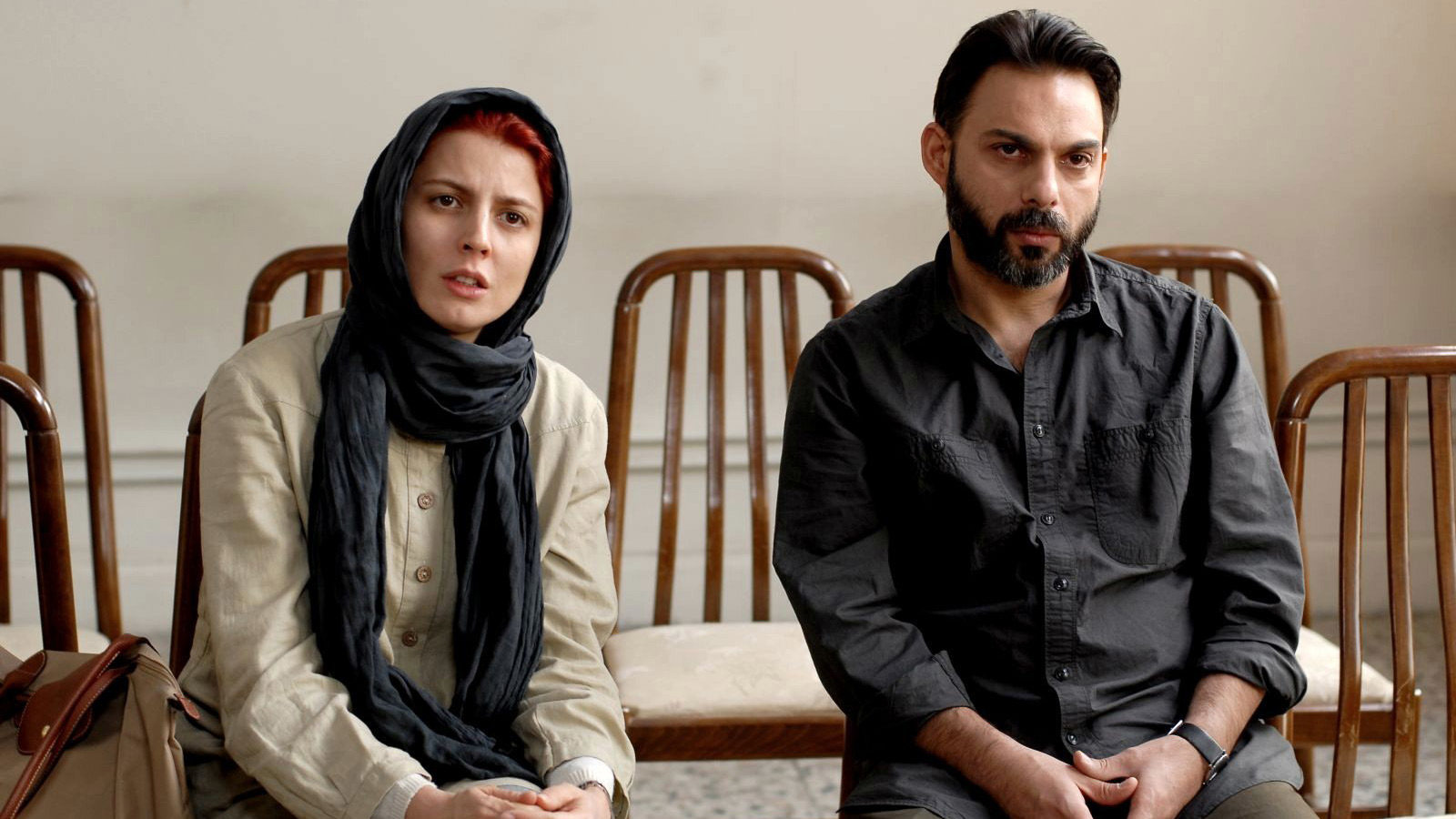
A Separation is an easy choice to start the final part of my top 20. This was my first Asghar Farhadi film and I wandered into it based on word of mouth hype during the fest. Here is an example of a drama that works best when you go in completely blind and let the storyteller do his thing. Farhadi has been making films in Iran since the early 2000s and has developed a formula all his own that works to stunning effect in A Separation.

Nader and Simin are going through a divorce and trying their best to do what’s right for their teen daughter. Nader hires a housekeeper to help take care of his father who suffers from Alzheimer’s. The woman, Razieh is a very religious, married, pregnant woman who takes the job in secret from her husband to help pay bills without upsetting his traditional ways. The job of caring for Nader’s father proves to be too much for Razieh, who is also taking care of her young daughter who tags along while she works. After losing track of the old man one day, Razieh is fired and this starts a series of events that sends shockwaves through both family units.

A Separation is a superbly balanced moral dilemma that presents a cast of flawed, but good characters fleshed out by authentic, unaffected acting performances. The film is intimately shot, but leaves plenty of room for symbolism and visual poetry. Often the characters are shown on opposite ends of a wall, a door or a pane of glass. These separators, of course, call to the title of the film, but also the large divides that occur in our own homes between family members, or the gaps created by wealth and religion.

This film asks very difficult questions and just when you think you have an answer, things shift and the moral ground is suddenly impossible to navigate. The truth becomes formless and malleable. Small secrets and lies fester and grow until they are released in heartfelt confessions, too late to repair the damage that has been done. I remember my experience in the theater as things fell into place and I was drawn further and further forward in my seat, a small grin at the clever twists, until I myself was twisted and tied into a million little knots, rolling around in the aisle trying to contain myself.

4

4 – The Films of Hong Sang Soo – 2010 to 2019 – Korea

That’s right. I’m not gonna choose on this one. I considered a few options to pick from the prolific director’s fourteen film decade, but decided that it was not a single film, but the cumulative effect of all of these films that had such a profound effect on me. To be truthful, the first Hong Sang Soo movie that I saw, back in 2010, HaHaHa, left me so confounded that I was frustrated. The audience was primarily Korean and laughed uproariously throughout. I couldn’t help feeling like I was on the outside looking in. Perhaps there was some cultural understanding that I just didn’t have and this filmmaker, whose name was quickly surfacing in the discourse, was just too Korean for me. In spite of this, I found myself seeing more of his work, trying to figure out what the big deal was. The second film I saw was The Day He Arrives in 2011 and the change was subtle, but did not go unnoticed. This film had me giggling along with the rest of the crowd. The snow covered black and white cinematography was gorgeous and the repetitive pacing and soft tone was charming. I wasn’t sold on Hong, yet, but I was no longer feeling left out.

I skipped his 2012 output and a couple years later moved out to Japan with my wife. While I was out there, I decided to watch 2013’s Hill of Freedom, a story about a Japanese man who takes a trip to Korea to track down a Korean girl he had fell in love with years before. He stays in a guesthouse near her home and waits in a cafe hoping to see her. Most of the scenes in Hill of Freedom are in broken English between the Japanese man and the Korean people living around him. The effect of two people communicating through a shared language that is not their own is both hilarious and endearing. When you eliminate the comfort of a first language, people are left unguarded and open. Hong recognizes that and fills the film with fumbling scenes of small talk and empty politeness. This so closely mirrored my experience at the time, a foreigner in small town Japan, my chances for deep communication were few and the moments when I could forge a connection with another human being usually employed the most basic of English expression. There in my bedroom, my television cranked to max to drown out the deafening cicadas, suddenly everything clicked. The long shots of drunken conversation, the hand painted title cards and chamber music, the confusing sense of reality and time. I was in love. Since this day I cannot sit through a Hong Sang-Soo movie without weeping throughout. I can’t explain the effect these films have on me, but they cut deep to my core and leave me helpless in their confident, humanist portrayals of life.

Hong Sang-Soo is known for repeating himself. Much like Farhadi, who directed the previous selection in this list, he has a formula and sticks to it. A small group of Korean intellectuals or artists, get drunk, usually two at a time and tear themselves or eachother apart. There are conversations about art and philosophy, there are tears and sex. Everything unfolds over a series of single shot scenes, written earlier that day, and always there is inevitably a camera zoom. The Hong Sang-Soo zoom is my favourite thing in films in this decade. It sounds silly, but he has boiled down this simple, clumsy camera movement into a finely tuned technique that can inspire both outrageous laughter and breathless tears. When I watch his films in a theater I have to force myself not to clap every time it happens. My wife can attest I am unable to keep quiet when I watch a Hong film at home.

So I can’t and I won’t pick a favourite. I am quite partial to the films of Hong that are not completely in Korean. The language barrier films, In Another Country, Hill of Freedom and Claire’s Camera are good examples of when Hong uses this hurdle to dig deeper at low stakes, temporary relationships and how people can find meaning and purpose in each other without being able to communicate. Film’s like On the Beach at Night Alone and Nobody’s Daughter Haewon start in similar fashion, following characters on vacation in Europe, who return home to Korea and for different reasons fall into deep depression. Heavy with sadness, these films are painful and beautiful and full of strong performances.

Perhaps the most interesting type of Hong film are the ones that play with the concepts of time and reality. Right Now, Wrong Then may be the best example of that, and is also the film I chose to include as a screenshot above. Told in two parts, the first of which follows a director who is in Seoul to screen his newest film. He comes across a beautiful young lady (Kim Min-Hee, the director’s recent muse and lover, which is a whole ‘nother can of worms I don’t have the time to get into here) and is smitten. He strikes up a conversation and learns she is a painter. They go to her studio where he compliments her work profoundly. They get drunk and he confesses his love to her. Things play out for a bit and eventually fall apart as they get to know eachother better and then half way into the film, we go back to the start and do it all again, but this time things are slightly different. Like watching a movie over again through a fun house mirror, things play out in similar fashion, but the details and more importantly the energy is completely different. By the time they arrive at her studio and he insults her by saying that her art is fundamentally sound, but lacks soul, the differences are both subtle and groundbreaking.

So again. I can’t choose just one. Because of that, I have these films placed at #4 because I have three single pieces that I knew from the start were my three top movies. With that being said, Hong Sang-Soo is without question the most important filmmaker for me in this decade.
3

3 – The Master – Paul Thomas Anderson – 2012 – USA

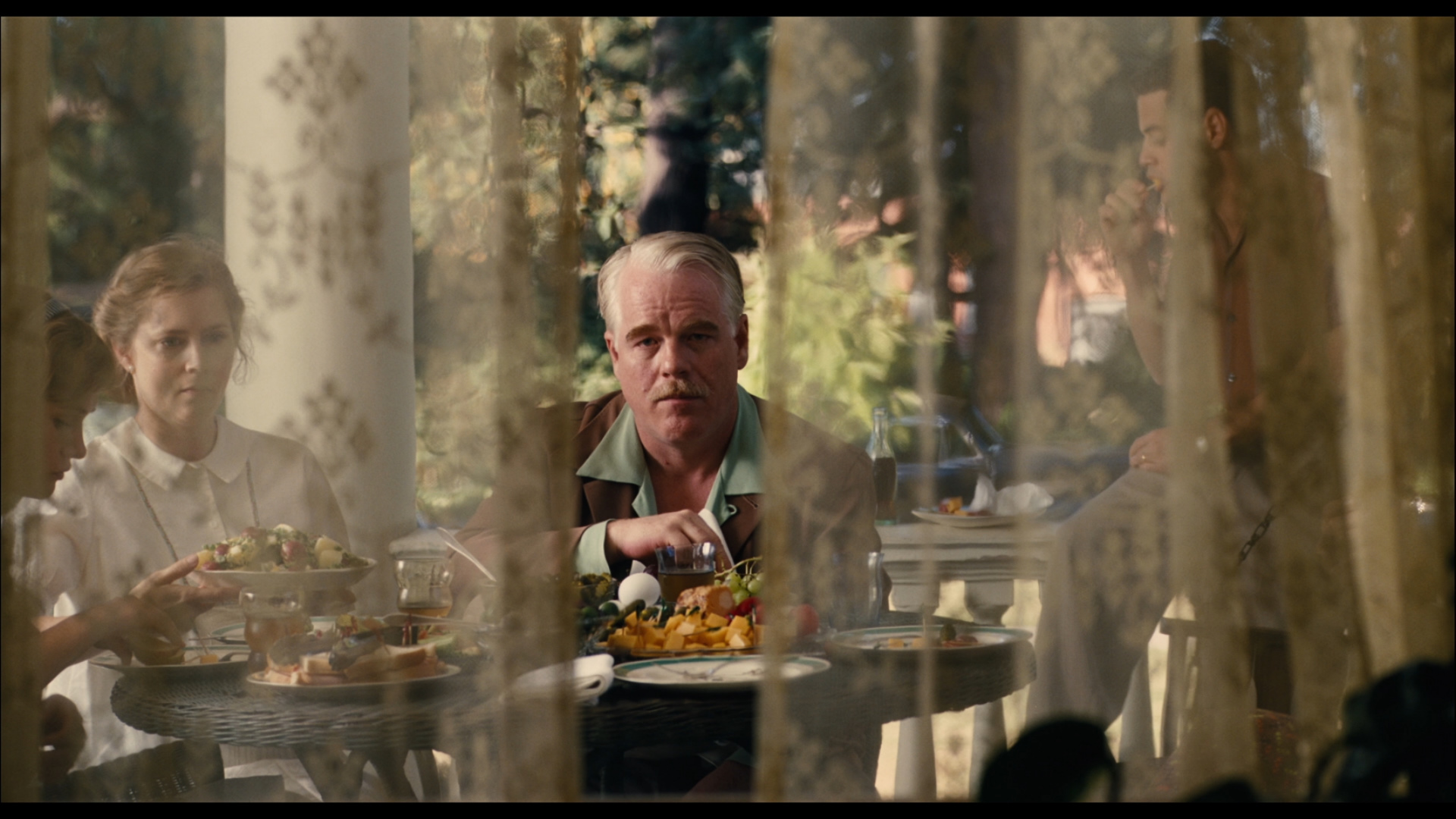
I credit the films of Paul Thomas Anderson with igniting my love for cinema and setting me off to see as much as I could and refine my understanding of the medium over the last 17 years of my life. That after all this time, I can still sit here and cite a PTA film as one of my top 3 of the decade is amazing to me. Some of my other favourite directors from that time in my life made some really terrific films this decade, but none of them actually appear on this list. Aside from a few exceptions this list is composed of filmmakers who were totally new to me in this decade. When I saw The Master back in 2012, it hit me hard in a way I didn’t and still don’t full understand, but I knew from that moment it was PTA’s best work and find myself returning to it on a yearly basis since.

Of course the performances in this film are a huge draw. Joaquin Phoenix as Freddy Quell and Philip Seymour Hoffman as Lancaster Dodd turn in their best performances and work off of each other to establish a mesmerizing dynamic as they butt heads and hug it out over the control of one’s mind. This is Paul Thomas Anderson at his most focused and aware. A pared down and mysterious film that obscures the need for any message and instead asks you to just feel a connection. There is no clear conflict. No precise goal.

I think the closest we come to a clear answer is when Dodd tells Freddy “If you figure out a way to live without a master, any master, be sure to let the rest of us know, for you would be the first in the history of the world.” The weight of these words lands different on me each time I see this film. I think this is partly owed to the delivery of the late, great Hoffman, who was lost, grappling with his own master. His desperation and longing as he sings “Slow Boat to China” is my favourite acting moment in the decade and one of my favourite scenes ever. The Master is a painfully accurate depiction of dependence and addiction and yet I find myself wondering if the prospect of living life without a master would even be worth it. Difficult and essential. A film to grow old with.

2

2 – Poetry – Lee Chang-Dong – 2010 – Korea

Speaking of films to grow old with. Here is a film from the very beginning of the decade. I didn’t want to double up on directors in this list, but Lee Chang-Dong’s Burning is an absolute favourite from 2018, and there was no way that it was going to bump Poetry out of my top 3, as I have many times called it my favourite movie of all time. 2010 was a long time ago, as I’ve been exploring throughout this list, but every time I have revisited Poetry it has only hit me harder.

Mi-Ja is 66 and takes care of her 16-year-old grandson. We meet her in a doctor’s office, she is starting to become forgetful and is having trouble remembering words. She works part time taking care of a wealthy old man, who has been paralyzed from a stroke. On her way home one day, she notices a poster for an adult poetry class and decides to sign up. The teacher tasks the class with writing one poem by the end of the month-long course and she is encouraged to look deeper at the objects around her, to see them as they really are. She spends the days admiring flowers and taking notes.

Meanwhile Mi-Ja finds out that her grandson, along with a few of his friends, are responsible for the death of a female classmate. The nature of his crime is horrific and Mi-Ja is swept up in the proceedings as the families of the boys debate how much money would be appropriate for them to give to the poor, bereaved family. Mi-Ja drifts away from these brutal conversations to examine a flower on the table, lost in her newfound world of poetry. She attends poetry readings with members from her class and they go for dinner with their teacher, a famous poet and discuss poems and what constitutes art. Mi-Ja is sent by the other parents, to the countryside to reach out to the dead girl’s mother. When she finally meets her face to face, she can only bring up how beautiful the flowers in the area are. She finally concocts a plan to get the money she owes from the old man she takes care of.

The underlying plot in Poetry is tense and exciting. It is a slow, methodical film that takes it’s time in setting everything up, but once it gets there, Lee delivers some of the most acutely profound images ever committed to film. A particular shot of the grandson playing with a few neighborhood children, showing the younger ones how to hula hoop. A hat blown by the wind into a rushing river. A game of badminton in a dark street. These moments explode with pain and joy. In Poetry we are shown the beauty in everything. When Mi-Ja finally delivers her poem, I have no words for the amount of emotion that runs through me. Even thinking about it now has me in tears. I cannot recommend this film enough. I hope those who have not seen it yet will take my word for it and seek it out, you will not regret it.
1

1 – Toni Erdmann – Maren Ade – 2016 – Germany

So after reading all of this, I’m sure what you expected in first place was a comedy, right? Albiet a German comedy that clocks in at nearly 3 hours in running time, but still, a bit of a left turn. I did not know what to expect when I sat down in the theatre in 2016 to see Toni Erdmann, but the considerable buzz was certainly in the air at that point. Within minutes, I and the packed theater at The Centre in Vancouver were screaming with laughter which did not stop for the next 160 minutes.

The story of a father and a daughter who have nothing in common. The father, Winfried is a goofball music teacher obsessed with playing pranks that only he seems to get a kick out of. His main gag involves slapping in a pair of fake teeth over his real ones and letting them stick out from under his lip. It’s stupid, but the joke is never treated as something actually funny and rather the other characters generally roll their eyes and laugh it off. His daughter, Ines is an upwardly mobile woman climbing the corporate ladder in a consultation firm doing work in Romania. She has no time for nonsense and regards her father with a scoffing sense of disdain.

When his dog passes away, Winfried takes an impromptu trip to Bucharest to check in on his daughter. His worry is that she’s losing her soul to the corporate machine and he shows up unannounced in the lobby of her workplace, popping his false teeth in so she’d recognize him. Ines sends her Romanian assistant down to the lobby to help her father get a room somewhere in Bucharest and tell him that he is invited to attend a company party with her that evening. The party does not go well and Ines loses ground with her client, a very wealthy CEO, who seems more interested in her goofy father than listening to a woman tell him how to run his business. Ines gets into a fight with her father the next day and he leaves, only to return in disguise and throw her world and the entire film into complete chaos. Honestly to say anymore about this film would take away from its deep well of surprises.

What follows is some of the funniest and most uncomfortable comedy in a decade that has perfected the art of cringe comedy. Ines’ world view begins to crumble amidst the madness and as she starts to lose hold of the world she worked so hard to be a part of, asher viewpoint shifts and she learns to embrace the path of deconstruction. Little by little her armor is picked away and the girl she was in her father’s eyes melds with the woman she has become. This process is so much fun to watch, but the pitch perfect performances from Sandra Huller and Peter Simonischek ensure that the hilarity never drives too far away from the heart of the film, which is the deep familial love between Ines and her Father and the slow process of closing a divide (there’s that word again) that appears when a child grows up. If you look back, you will see many echoed themes from Toni Erdmann in the other films in this list. The eroding effects of globalization and time. Tenuous familial bonds. The presence and importance of language in our modern world. Love.

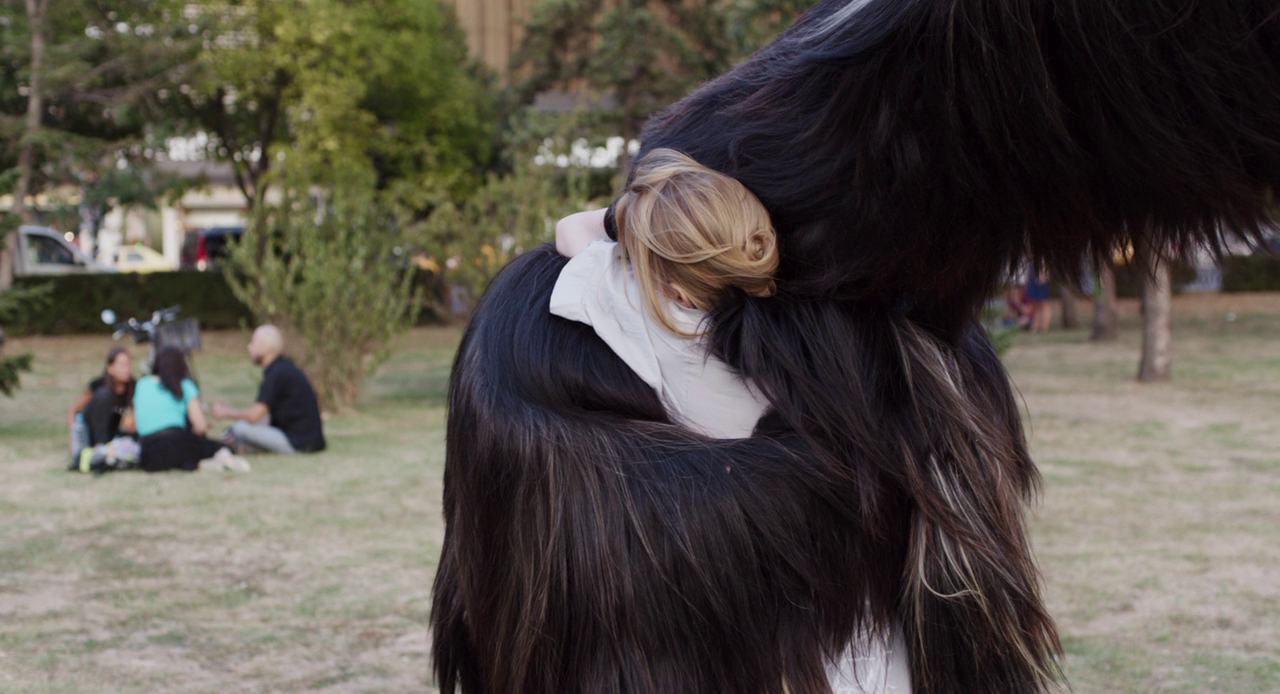
The image above defines this decade in film for me. From the moment I witnessed it in the theater, I never stopped thinking about it. Later on I saw that the producers used the image on their poster. In some instances a moment so late in a film could be a spoiler, but this image is too perfect to be spoiled. A confusing silhouette: a giant monster covered in long black hair embraces a small woman in white, her blonde hair tied up behind her head in a spiral, small wisps of it starting to unravel and fall to her shoulders, her arm clutches tightly around his neck, almost disappearing into his mass of black hair. Order and Chaos. The moment is silent. It happens quickly and is over just as fast. In a single image, Maren Ade has given me the thing I’ve been searching for in every film for the last 17 years. A single, perfect expression of love.

[20 – 16]   [15 – 11]   [ 10 – 6 ]
My Top 20 Films – 2010 – 2019 – #10-6

10

10 – Under the Skin – Jonathan Glazer – 2013 – UK

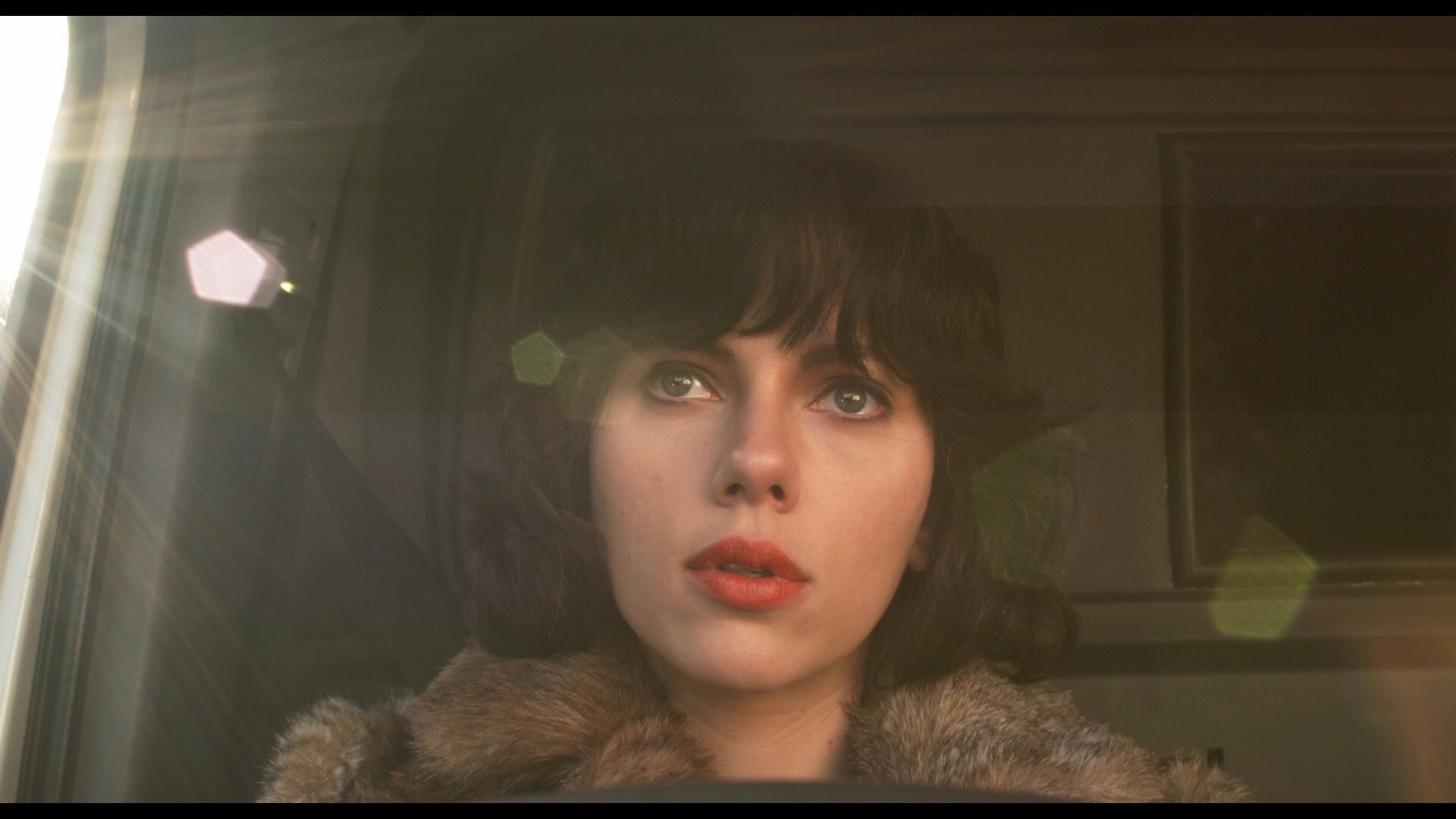
Scarlett Johansson plays an alien who comes down to earth in the form of a glassy-eyed sexpot, and cruises Scotland in a van, picking up men and… eating them? Part sex fueled sci-fi nightmare, part hidden camera prank show, Under the Skin is both minimalist in style and tone, and also extreme, disturbing and outrageous.

The use of non-actors in cinema excites me. To me the sign of a great director is somebody who can pull profound performances from children or first time actors. Many films in my top 10 share this quality. In Under the Skin we get the hybrid of an A-lister working opposite a cast of actors who don’t even realize they are in a movie. Captured on hidden camera, the producers would then let the strangers in on the idea for their production and film the rest of the sequences in a trailer behind the van (horrific and confounding abstract death scenes that I don’t want to spoil, but will say are my favourite uses of CG in cinema this decade). It is hard to imagine how this film was actually possible, when you think about what they asked these non-professionals to do. The final product at times has the feeling of a documentary about human sexuality, only to inevitably turn into horror over and over again. Once the pattern is set, a character is introduced that turns the whole film inside out. The scene between the disfigured Adam Pearson and blank faced sex doll Johansson is a crushing, painful examination of alienation.

Scarlett’s work in this film is important. She portrays an otherworldly creature without the aid of makeup or effects. Before she even gets to work on her victims, it is clear that something is not right and as she’s seduced by earthly pleasures, her humanity shows in just the right ways. A beautiful, seemingly harmless woman stoically murders her way up the Scottish coast.  Under the Skin is a reversal of the dangerous reality that women live in. A bone chilling experience with some of the most disturbing, abstract images of the decade.

9

9 – The Body Remembers When the World Broke Open – Elle-Máijá Tailfeathers, Kathleen Hepburn – 2019 – Canada

I saw The Body Remembers in October and went straight home to write this review. I have seen the film four more times since then, bringing friends and family who I hoped would benefit from seeing it. Many great discussions later, I am even more enthralled by this unadorned tale of two women brought together by an act violence and their struggle to meet across a social divide torn apart by a history of violence.

This will likely be my favourite film of 2019 and the only one I feel comfortable enough to place in this list of the decade. The Body Remembers stands as a huge step forward for English language Canadian cinema. Both ultra specific to the reality of a particular group’s experience and also universal in theme and tone, The body remembers is a beautiful balancing act of showing worlds through a tightly focused, non-stop experience. This film is perhaps the most profound in the quiet moments it takes to watch the two women in between conversations. In particular a scene with a record player and perhaps the most perfect song placement in the entire decade of cinema. Every time the film arrived at this scene, I found myself welling up and from that moment on, I fought to watch through the tears.

The success this film has had recently only goes to underline its importance and wide reaching capability. The Body Remembers is much more than just a great Canadian film. It stands on it’s own as a heart wrenching, meaningful cinematic experience that isn’t necessarily easy to take, but speaks directly to your heart without ever resorting to watered down generalizations or melodramatic tricks. That a local Canadian film has achieved this with such grace makes me very happy and hopeful for the future. No film from this decade has shown me what is possible and inspired me more to create than The Body Remembers When the World Broke Open and I am very grateful for that.

8

8 – Western – Valeska Grisebach – 2017 – Germany/Austria/Bulgaria

A group of German construction workers building a hydroelectric plant in a remote area of Bulgaria come into conflict with nearby villagers. One of the workers, Meinhard, a quiet loner starts to form a relationship with the villagers and is caught up in the culture clash as things threaten to become violent. A stellar cast of non-actors and a slow, brooding pace deliver a film full of wonderful moments of discovery and tension.

Early in, construction is halted after the workers lose access to the water supply for making concrete. Taking time off, they go down to the river to swim and happen upon a group of young women from the nearby village. One of the girls loses her hat in the river and it is retrieved by Vincent, the “leader” of the group. He teases the woman, refusing to give back her hat and the scene turns dark when he, not getting the reaction he wants, pushes her head under the water. This act incites ripples of anger across the local community. They are not welcome to these outsiders and their exploitative ways are not helping matters.

Meinhard ends up finding a horse and makes his way down to the village. At first he is treated with distrust and contempt, but as he starts to return on a daily basis and engage with the villagers in their day to day work, taking in their culture and even learning some of their words, the borders between the two groups start to blur and the villagers begin to welcome the crew into their town and homes. This peace does not last however as the invaders inevitably make their move to redistribute the water to the building of their dam.

This film is packed with the elements I’ve come to love over this decade. A diverse cast of non-actors. Lush, patient camerawork. A clash of culture and language. As Meinhard starts to incorporate some Bulgarian into his conversations, the effect is mostly lost on English speakers reading subtitles in one language, but the subtle way this comes about and manifests in the intimate moments he shares with some of the villagers is perfect. There is a certain sensitivity at play here that Grisebach employs without dipping into sappy sentimentality. This is the second of three female directed films in my top 10. I did not set out to fill any quota, but I am happy that I can without question place these films as high as I do. I haven’t had a chance to revisit this film since I saw it in 2017, but that hasn’t stopped me from thinking about it.

7

7 – Shoplifters – Hirokazu Kore-Eda – 2018 – Japan

I reviewed this film during last year’s VIFF and I think it’s the best review I’ve written, so Here is a link to my original review of Shoplifters, in case you missed it.

I won’t spend too much time adding to that. I think that review pretty much says it all. I will say that Kore-Eda rose quickly to become my favourite working filmmaker in Japan. I had seen some of his earlier films and was certainly impressed, but this decade has undoubtedly belonged solely to him as far as internationally recognized Japanese film goes. Shoplifters won the Palme D’or at Cannes and deservedly so, as it is a culmination of all the great family dramas that Kore Eda released before it. This film is so confident with what it is doing and his touch is so soft, it’s easy to look past this at one of the earlier and sometimes heavier hitting films.

Kore-Eda’s view on non-conventional family structure in a country all about structure is a much needed concept in Japanese cinema. Like Father, Like Son raises a moral dilemma that would crush most Japanese families, where bloodlines can be so important. I Wish examines the aftermath of divorce and the effect of distance on two brothers delivering a fantastical and hyper emotional finale. Our Little Sister continues that thought as a group of women meet the daughter of their estranged father decades after he left. Nobody else in the world is telling these stories with the level of sensitivity and understanding of Kore-Eda. Through daily rituals, he observes his subjects without judgement or definition. He employs Japan’s best actors and casts them alongside young children and without fail he is able to inspire incredible performances from them every time. Kore-Eda’s films don’t necessarily reflect reality. They are heightened versions of reality and keenly observed, intensely emotional dramas. His use of young actors grounds his cinema with an authenticity that is rarely found in the best acted pieces.

I haven’t watched Shoplifters a second time yet, because it made me and my wife cry too much.

6.png

6 – Burning – Lee Chang-Dong – 2018 – Korea

If you’ve talked with me about movies over the past 14 months, then there is a very good chance that you heard me talk about Burning. Lee Chang-Dong is one of Korea’s greatest filmmakers and has made a long career with heavily emotional dramas that ask us to contemplate life’s meanings through experiences of slow, painful loss. Burning was his first film in 8 years after the nearly perfect Poetry and the wait was worth every single second.

Based of a short story by Japanese novelist Haruki Murakami, Burning follows Jong-Su, an aspiring novelist who never writes anything. He runs into Hae-Mi, an unattractive girl who grew up with him in the countryside. The years and countless dollars worth of plastic surgery were kind on Hae-Mi and the two end up having sex. She asks him to take care of her cat, (which, in true Murakami fashion, is nowhere to be seen) while she is on vacation and when she returns with a young, handsome and very rich Korean man named Ben, Jong-Su feels his chance with the beautiful girl slipping away.

The three begin strike up a friendship of sorts and despite the rivalry, Ben seems to show interest in Jong-Su’s writing. One night they drive out to meet Jong-Su at his father’s farm where he’s staying and Ben sparks up a joint. The moment is powerful. When I saw this film, months later in Japan, a country where Marijuana is strictly illegal, this scene was cut from the broadcast completely. There’s a shift in this moment as Hae-Mi, high as a kite, takes of her shirt and floats across the field with her arms up in the air, dancing in search of meaning. A dance she calls “The Great Hunger.” Ben confesses to Jong-Su, later that night that he sets fire to random barns because he can and because they are there for him to burn. Jong-Su never hears from Hae-Mi after that and Burning suddenly becomes a suspense thriller. Or does it?

Perception and meaning are so relative and Lee Chang-Dong plays with this to frightening effect in Burning as we see everything through the experience of Jong-Su and when the inevitable final act reaches it’s peak, it is hard not to feel a pang of regret and fear that maybe what we think we know about these people isn’t really true at all. I have seen Burning many times now and cannot say for certain where I stand on that. The central mystery of the film is not the focus, but a cover for the deeper truths about sexual desire, ego and jealousy. There are complicated power dynamics that are shifted by status and gender. It’s also a beautiful study about artistic creation and the search for meaning through art. Burning is all those things and so much more. It’s a masterpiece from one of the world’s greatest filmmakers and the scene that serves as the centerpiece is my favourite complete shot from this decade.

[20 – 16]   [15 – 11]   [ 5 – 1 ]