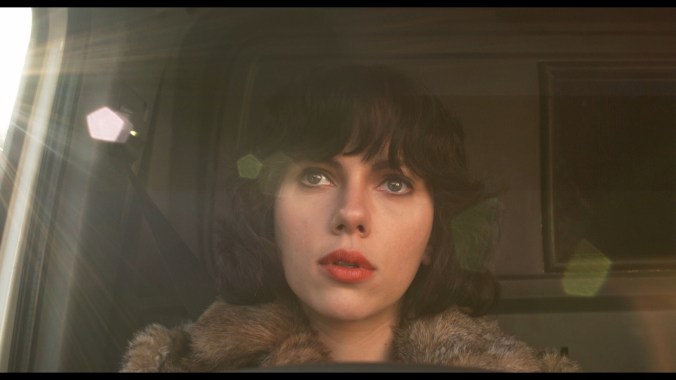
10 – Under the Skin – Jonathan Glazer – 2013 – UK
Scarlett Johansson plays an alien who comes down to earth in the form of a glassy-eyed sexpot, and cruises Scotland in a van, picking up men and… eating them? Part sex fueled sci-fi nightmare, part hidden camera prank show, Under the Skin is both minimalist in style and tone, and also extreme, disturbing and outrageous.
The use of non-actors in cinema excites me. To me the sign of a great director is somebody who can pull profound performances from children or first time actors. Many films in my top 10 share this quality. In Under the Skin we get the hybrid of an A-lister working opposite a cast of actors who don’t even realize they are in a movie. Captured on hidden camera, the producers would then let the strangers in on the idea for their production and film the rest of the sequences in a trailer behind the van (horrific and confounding abstract death scenes that I don’t want to spoil, but will say are my favourite uses of CG in cinema this decade). It is hard to imagine how this film was actually possible, when you think about what they asked these non-professionals to do. The final product at times has the feeling of a documentary about human sexuality, only to inevitably turn into horror over and over again. Once the pattern is set, a character is introduced that turns the whole film inside out. The scene between the disfigured Adam Pearson and blank faced sex doll Johansson is a crushing, painful examination of alienation.
Scarlett’s work in this film is important. She portrays an otherworldly creature without the aid of makeup or effects. Before she even gets to work on her victims, it is clear that something is not right and as she’s seduced by earthly pleasures, her humanity shows in just the right ways. A beautiful, seemingly harmless woman stoically murders her way up the Scottish coast. Under the Skin is a reversal of the dangerous reality that women live in. A bone chilling experience with some of the most disturbing, abstract images of the decade.

9 – The Body Remembers When the World Broke Open – Elle-Máijá Tailfeathers, Kathleen Hepburn – 2019 – Canada
I saw The Body Remembers in October and went straight home to write this review. I have seen the film four more times since then, bringing friends and family who I hoped would benefit from seeing it. Many great discussions later, I am even more enthralled by this unadorned tale of two women brought together by an act violence and their struggle to meet across a social divide torn apart by a history of violence.
This will likely be my favourite film of 2019 and the only one I feel comfortable enough to place in this list of the decade. The Body Remembers stands as a huge step forward for English language Canadian cinema. Both ultra specific to the reality of a particular group’s experience and also universal in theme and tone, The body remembers is a beautiful balancing act of showing worlds through a tightly focused, non-stop experience. This film is perhaps the most profound in the quiet moments it takes to watch the two women in between conversations. In particular a scene with a record player and perhaps the most perfect song placement in the entire decade of cinema. Every time the film arrived at this scene, I found myself welling up and from that moment on, I fought to watch through the tears.
The success this film has had recently only goes to underline its importance and wide reaching capability. The Body Remembers is much more than just a great Canadian film. It stands on it’s own as a heart wrenching, meaningful cinematic experience that isn’t necessarily easy to take, but speaks directly to your heart without ever resorting to watered down generalizations or melodramatic tricks. That a local Canadian film has achieved this with such grace makes me very happy and hopeful for the future. No film from this decade has shown me what is possible and inspired me more to create than The Body Remembers When the World Broke Open and I am very grateful for that.
8 – Western – Valeska Grisebach – 2017 – Germany/Austria/Bulgaria
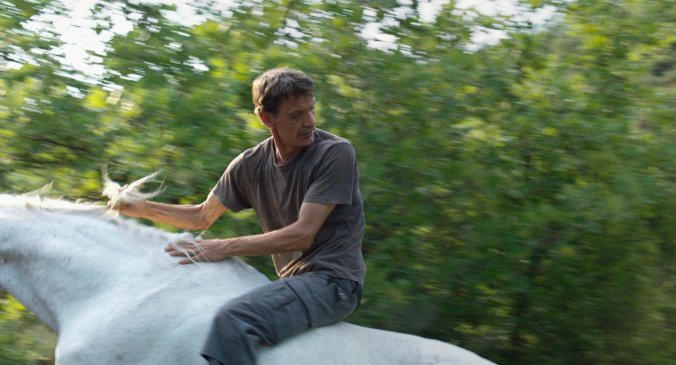
A group of German construction workers building a hydroelectric plant in a remote area of Bulgaria come into conflict with nearby villagers. One of the workers, Meinhard, a quiet loner starts to form a relationship with the villagers and is caught up in the culture clash as things threaten to become violent. A stellar cast of non-actors and a slow, brooding pace deliver a film full of wonderful moments of discovery and tension.
Early in, construction is halted after the workers lose access to the water supply for making concrete. Taking time off, they go down to the river to swim and happen upon a group of young women from the nearby village. One of the girls loses her hat in the river and it is retrieved by Vincent, the “leader” of the group. He teases the woman, refusing to give back her hat and the scene turns dark when he, not getting the reaction he wants, pushes her head under the water. This act incites ripples of anger across the local community. They are not welcome to these outsiders and their exploitative ways are not helping matters.
Meinhard ends up finding a horse and makes his way down to the village. At first he is treated with distrust and contempt, but as he starts to return on a daily basis and engage with the villagers in their day to day work, taking in their culture and even learning some of their words, the borders between the two groups start to blur and the villagers begin to welcome the crew into their town and homes. This peace does not last however as the invaders inevitably make their move to redistribute the water to the building of their dam.
This film is packed with the elements I’ve come to love over this decade. A diverse cast of non-actors. Lush, patient camerawork. A clash of culture and language. As Meinhard starts to incorporate some Bulgarian into his conversations, the effect is mostly lost on English speakers reading subtitles in one language, but the subtle way this comes about and manifests in the intimate moments he shares with some of the villagers is perfect. There is a certain sensitivity at play here that Grisebach employs without dipping into sappy sentimentality. This is the second of three female directed films in my top 10. I did not set out to fill any quota, but I am happy that I can without question place these films as high as I do. I haven’t had a chance to revisit this film since I saw it in 2017, but that hasn’t stopped me from thinking about it.
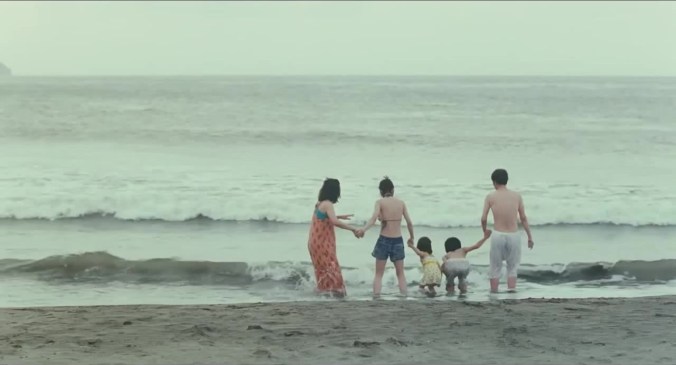
7 – Shoplifters – Hirokazu Kore-Eda – 2018 – Japan
I reviewed this film during last year’s VIFF and I think it’s the best review I’ve written, so Here is a link to my original review of Shoplifters, in case you missed it.
I won’t spend too much time adding to that. I think that review pretty much says it all. I will say that Kore-Eda rose quickly to become my favourite working filmmaker in Japan. I had seen some of his earlier films and was certainly impressed, but this decade has undoubtedly belonged solely to him as far as internationally recognized Japanese film goes. Shoplifters won the Palme D’or at Cannes and deservedly so, as it is a culmination of all the great family dramas that Kore Eda released before it. This film is so confident with what it is doing and his touch is so soft, it’s easy to look past this at one of the earlier and sometimes heavier hitting films.
Kore-Eda’s view on non-conventional family structure in a country all about structure is a much needed concept in Japanese cinema. Like Father, Like Son raises a moral dilemma that would crush most Japanese families, where bloodlines can be so important. I Wish examines the aftermath of divorce and the effect of distance on two brothers delivering a fantastical and hyper emotional finale. Our Little Sister continues that thought as a group of women meet the daughter of their estranged father decades after he left. Nobody else in the world is telling these stories with the level of sensitivity and understanding of Kore-Eda. Through daily rituals, he observes his subjects without judgement or definition. He employs Japan’s best actors and casts them alongside young children and without fail he is able to inspire incredible performances from them every time. Kore-Eda’s films don’t necessarily reflect reality. They are heightened versions of reality and keenly observed, intensely emotional dramas. His use of young actors grounds his cinema with an authenticity that is rarely found in the best acted pieces.
I haven’t watched Shoplifters a second time yet, because it made me and my wife cry too much.

6 – Burning – Lee Chang-Dong – 2018 – Korea
If you’ve talked with me about movies over the past 14 months, then there is a very good chance that you heard me talk about Burning. Lee Chang-Dong is one of Korea’s greatest filmmakers and has made a long career with heavily emotional dramas that ask us to contemplate life’s meanings through experiences of slow, painful loss. Burning was his first film in 8 years after the nearly perfect Poetry and the wait was worth every single second.
Based of a short story by Japanese novelist Haruki Murakami, Burning follows Jong-Su, an aspiring novelist who never writes anything. He runs into Hae-Mi, an unattractive girl who grew up with him in the countryside. The years and countless dollars worth of plastic surgery were kind on Hae-Mi and the two end up having sex. She asks him to take care of her cat, (which, in true Murakami fashion, is nowhere to be seen) while she is on vacation and when she returns with a young, handsome and very rich Korean man named Ben, Jong-Su feels his chance with the beautiful girl slipping away.
The three begin strike up a friendship of sorts and despite the rivalry, Ben seems to show interest in Jong-Su’s writing. One night they drive out to meet Jong-Su at his father’s farm where he’s staying and Ben sparks up a joint. The moment is powerful. When I saw this film, months later in Japan, a country where Marijuana is strictly illegal, this scene was cut from the broadcast completely. There’s a shift in this moment as Hae-Mi, high as a kite, takes of her shirt and floats across the field with her arms up in the air, dancing in search of meaning. A dance she calls “The Great Hunger.” Ben confesses to Jong-Su, later that night that he sets fire to random barns because he can and because they are there for him to burn. Jong-Su never hears from Hae-Mi after that and Burning suddenly becomes a suspense thriller. Or does it?
Perception and meaning are so relative and Lee Chang-Dong plays with this to frightening effect in Burning as we see everything through the experience of Jong-Su and when the inevitable final act reaches it’s peak, it is hard not to feel a pang of regret and fear that maybe what we think we know about these people isn’t really true at all. I have seen Burning many times now and cannot say for certain where I stand on that. The central mystery of the film is not the focus, but a cover for the deeper truths about sexual desire, ego and jealousy. There are complicated power dynamics that are shifted by status and gender. It’s also a beautiful study about artistic creation and the search for meaning through art. Burning is all those things and so much more. It’s a masterpiece from one of the world’s greatest filmmakers and the scene that serves as the centerpiece is my favourite complete shot from this decade.


Pingback: My Top 20 Films – 2010 – 2019 – #20 -16 | Crossing Borders
Pingback: My Top 20 Films – 2010 – 2019 – #15-11 | Crossing Borders
Pingback: My Top 20 Films – 2010 – 2019 – #5-1 | Crossing Borders