VIFF Day 5 – 120 Beats Per Minute (BPM)

120-BPM-1000x600

What could be worse? An invisible virus for which there is no cure. Your body’s ability to fight disease is lost. Death is inevitable, as the search for a cure is tied up in pharmaceutical purgatory. Moments of intimacy become dangerous. Nobody seems to care that you and your friends are dying. Perhaps the only thing worse than being sick is being healthy and watching everyone you love slowly waste away.

Director, Robin Campillo and co-writer Philippe Mangeot draw  from their own experiences in the 90’s as activists for AIDS awareness with the group ACT UP PARIS. Having lived through the situation, Campillo requires little-to-no research in conjuring up an authentic and personal story about an important and harrowing time in LGBTQ history.

BPM bears some resemblance to another film written by Campillo, The Class, the 2008 Palme D’or winner about political and social unrest in a Parisian middle school. Much of BPM takes place at ACT UP’s weekly meetings, where a cast of talented, young, French actors debate and discuss their plans for peaceful protest against a pharm corporation that is delaying the findings of a study on a new AIDS drug. Campillo cuts back and forth between the protests and the discussion. Amidst snapping fingers and hisses, they argue about how best to move forward. The energy in the room is consistently electric and I began to feel immersed in this small world.

Nathan (Arnaud Valois) is a new recruit to the group and one of the only gay men who isn’t HIV positive. He begins a relationship with Sean, (a superb performance by Nahuel Pérez Biscayart) an outspoken and passionate young man who has been Positive for a couple years. Their courtship takes place in a night club, the flashing lights and mess of bodies fades out of focus and we in stead watch the sparkling dust particles flying through the air, shining in the bright strobes. We see an infected cell. At home the men make love and discuss their sexual history. Sean tells Nathan how he got infected, Nathan tells him of a close call with a lover who became ill.

Despite the foreboding presence of death and the outrage directed at capitalist pharmaceutical manufacturers, BPM is a joyous celebration of life. The love and affection that is shared by the activists, their excitement and nervousness as they stage a potentially dangerous protest and the inevitable mourning that comes when another in their number succumbs to the diesease, paints a picture of a close-knit family bound together by a mutual cause and a fatal, ticking clock.

The film is long. 144 minutes. Somehow the cast is able to hold your attention without changing the debate/protest formula throughout. As the film reaches a conclusion, we are left with a deeply personal story about saying goodbye to a loved one. Again Campillo apparently draws from personal experience here and it’s hard not to feel the heartache and gratitude that he is dealing with. This is a film about protest though, and a shot of the Seine river red with blood is a powerful, sobering image. A delightful, crowd-pleasing film and an informative look into a real episode in our recent history. Great stuff.
VIFF Day 5 – A Fantastic Woman

UMF_5n-2000-2000-1125-1125-crop-fill

Identity politics and red tape get in the way of a woman’s right to say goodbye to her deceased lover in Sebastián Lelio’s Chilean drama. Winner of a Silver Bear for screenplay at Berlin and featuring a breakthrough performance by Daniela Vega, Lelio’s colourful film is brutally honest and unflinching.

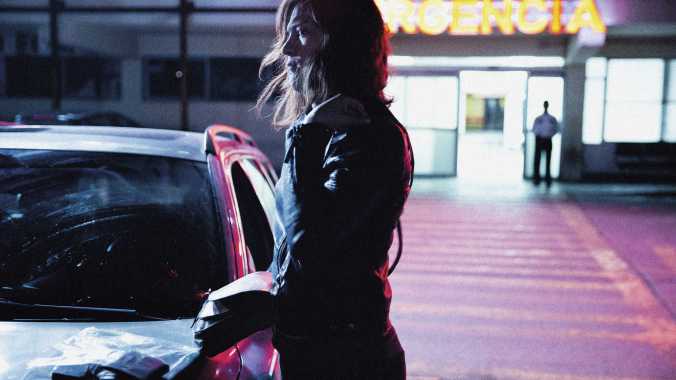
The film opens with a powerful image of a waterfall. The shot of the raging water kicking up mist slowly dissolves to a shot of a men’s steam room bathed in red LED light. The sudden blast of colour as the light slowly changes from red to purple to blue is intoxicating. A middle aged man, Orlando, leaves the steam room and heads out to meet with his lover, Marina, (Vega) as she finishes her evening gig singing in a club. The two have a night of romance, dinner, drinks, sex, and then in the middle of the night Orlando wakes up feeling lightheaded. On their way out of the building he falls down the stairs. At the hospital, Marina is eventually informed that Orlando has died.

Marina is a transgender woman. The sudden tragedy ignites a series of events where we see her stripped of her basic human rights. The bulk of the film follows Marina as she is routinely questioned, examined and prevented from mourning the death of her lover. Orlando’s ex-wife and son treat her with disgust. They order her to leave Orlando’s apartment, taking away his dog, Diabla, which Marina claims Orlando had given to her. Marina is told in no uncertain terms that she is not to be at Orlando’s wake or funeral. The police harass Marina, asking invasive questions and forcing her to undergo an embarassing physical examination.

There have been a few films in recent years about Transgender characters. In Hollywood, you’re likely to see these characters played by men pretending to be women. Like 2015’s outstanding Tangerine, Lelio casts a talented trans actor in the lead role and the effect is personal and authentic. When a police officer refuses to refer to Marina by her name and instead calls her “Daniel,” you can see the pain it causes in Marina’s eyes. She doesn’t have to show us. It’s already there. It’s been there her whole life. Her brave, honest performance is a gift to those of us lucky to never have to deal with this kind of prejudice.

There is a scene later in the film where A Fantastic Woman appears to take a hard left turn, but the brutal scene is thankfully the beginning and ending of the physical violence in the film. Lelio reminds us of the danger that exists without having to sink to exploitation or sensation. The script does take some easy outs, but the focus remains on Marina and her against-all-odds grace as she navigates through her grief. Another image of her walking down a street into a powerful wind, she fights against it, but is eventually planted in place, leaning forward, it looks as if she might blow away, but she stands strong.

Lelio’s previous film Gloria was also a huge hit at VIFF a few years ago. The Chilean is releasing two films in 2017, the second in English under the title Disobedience.  His momentum and tasteful use of colour and magic realism in Fantastic Woman in the service of telling a simple character study, tells me that we are in for some interesting films in the future.

VIFF 2017 – Day 4 – Loveless

maxresdefault (3)

The bitter ending of a marriage and a search for a missing child prove fertile ground for scathing social commentary in Andrey Zvyagintsev’s haunting Loveless. No stranger to criticizing Russian society, it is a wonder that Zvyagintsev has been able to produce the films he makes on home soil. A cursory look at the opening credits shows a lot of financing coming from France and Germany. This international funding approach also shows in Zvyagintsev’s tone. Tarkovsky, Bergman and Haneke all show up in Zvyagintsev’s work.

The film opens on Alyosha, a shy and quiet 12-year-old boy as he walks home through a Russian winter. Back at home, he is treated with indifference by his mother, Zhenya. She talks to him like an adult that she doesn’t particularly like. Distant and cold. Her husband, Boris, arrives home from work and within minutes the parents are fighting. A particularly brutal war of words unfolds and the adults speak freely about their relationship and their child, thinking their son has gone to sleep. The moment we finally see that he has been listening is devastating in its quiet horror, as we watch the very talented child actor’s face contort under a stream of tears. A truly painful moment.

The couple are well into the end of their marriage. Both involved in extramarital affairs, Zhenya with an older, well-off man and Boris with a younger, very pregnant woman. They are both looking for ways out of their marriage, but are fighting against external factors: particularly Boris’ job. Boris’ boss is an extremely conservative Christian. Boris hears from a co-worker of another employee hiring a woman to pretend to be his wife at a Christmas party for fear of being fired if exposed as a divorcee.

This isn’t a spoiler, as it’s part of any synopsis released of Loveless, but halfway into the film Alyosha goes missing. It is unclear where he’s gone or why he left. We spend the rest of the film following the couple as they exhaust all available means to try and find their son. A filmmaker with less to say would use this situation as an opportunity to bring the warring couple back together. Zvyagintsev chooses to present an absolutely irreparable rift and allows the characters to be unlikable and self centered, perhaps never learning any lessons from the experience.

This film is no different from the director’s previous in terms of the outrage directed towards the Russian ruling and middle class. Orthodoxy casts a shadow over the marital struggles. Constricting bureaucracy gets in the way of finding Alyosha. Zhenya seems to live two lives, as she speaks in horrible ways about her son to a co-worker, pausing for a moment to snap one of many selfies, but is suddenly thrust into the role of the worried mother without necessarily knowing why or how to emulate.

This is not a film about closure. The child missing is not so much a plot point as it is a mirror for the unlikable and self-absorbed parents. Zvyagintsev offers no answers or catharsis, but rather a black, tangled mess not unlike the images of bare branched birch trees that fill the frames of Loveless. Zvyagintsev has employed the image of tree branch silhouettes before. Like the image, there are echoes from Zvyagintsev’s previous films. Leviathan’s disdain for Christianity and stifling beurocracy, Elena’s stark depiction of love and marriage and The Return’s story about estranged family all appear in Loveless. 

Bleak, angry and quietly enthralling, Loveless  is another in a string of assured and confident films from the Russian master. Five features in and no sign of slowing down, the future is bright for Andrey Zvyagintsev, even if his films might lead you to feel differently. We have a master craftsman working at the top of his game in difficult circumstances. A reason for celebration, indeed.

VIFF 2017 – Day 3 – Capsule Reviews

A few short reviews to catch up.

maxresdefault (2).jpg

The Square – Reuben Ostlund – Sweden

A laugh-out-loud satire of the modern art world. Acerbic and outrageous. A deserved winner of this years Palme D’or. The curator for a huge museum in Stockholm is pickpocketed in the days leading up to a huge exhibition. His mission to recover his lost items distracts from his work and his world begins to crumble. There are plenty of sequences that feel funny and dangerous at the same time. Claes Bang, who plays Christian the curator is suave and confident, but the world he lives and works in is so convoluted and hypocritical. The scene in the photo above is a real adventure, but my favourite sequence comes earlier, when Christian and an employee devise a scheme to get his phone back. Driving to a low-income neighbourhood where the phone was traced to, they play a track by Justice to hype themselves up. The boys trying to be men energy calls back to Ostlund’s last film Force Majeure. This is a real treat of a film and I have much more to say about it. I will revisit it with a longer review later this year.

anarchist-from-colony_thumbnail_1560x872

Anarchist From the Colony – Lee Joon-Ik – Korea

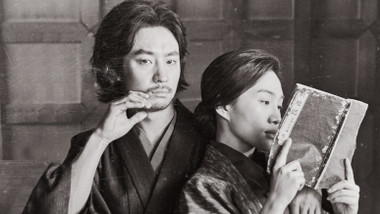
A historical dramedy about Park Yeol, a Korean activist in Imperial Japan and his partner, Fumiko Kaneko, a Japanese born Korean who helped Park to bring attention to the massacre of Koreans after the Kanto earthquake of 1923. This is a slow film that isn’t helped by it’s strange, light-hearted first act. By the time you get to the meat of the story, the film has already presented itself as a broad Korean comedy, down to the crammed in love story. Lee Joon-Ik earns some of this back by the end with some sentimental speeches and conversations. Lee Je-Hoon is electric in the lead role and really fun to watch. His counterpart, Choi Hee-Seo is not my cup of tea. Mugging and gesturing in a way you only see in historical Korean dramas. Not a bad movie, but with a mostly Korean cast speaking mostly in Japanese (I know because I could understand what they were saying without subtitles. Native speakers are way too fast for me) and some cloying nationalistic sequences at the end, I’m left feeling like Anarchist From the Colony plays a lot better on home shores than it does over here.

Okja

Okja – Bong Joon-Ho – Korea/USA

Recently released on Netflix, I went to see Okja a second time in the hopes of seeing Director Bong in person. Alas, his broken ankle kept him in Korea and we had to make do with a Skype Q&A. The Q&A focused mostly on the role of CG in the film. Particularly the techniques used to help connect the film’s star Ahn Seo-Hyun to her animated counterpart Okja. We are left with a touching story about family. A young girl does extraordinary things to save her best friend. A lesser filmmaker would be distracted by his creation. He would spend all too much time showing off and would lose sight of his story. Bong Joon-Ho is a humanist filmmaker and tells his stories through the characters, not the set pieces. There are some fantastic chase sequences and destructive action scenes, but the really important effects focus on intimate moments. Touch. An embrace. There are some false line-readings that I assume come from translation problems, but Bong’s deft use of slapstick and dark comedy mix perfectly with the exciting and sentimental scenes that are expected in a film like this. Bong Joon-Ho is a filmmaker with impressive momentum. The most successful of his contemporaries to make a film in English. For a director that relies on genre, his films are consistently fantastic and affecting. He asked us to consider his films up to now to be his “Early work” and I fully trust that we have decades of growth and more near-perfect films ahead.

Tomorrow I will be seeing two films in the evening. Expect a review for Zvygintsev’s Loveless by Monday.

VIFF 2017 – Day 2 – Claire’s Camera

thumb_51567_film_film_big

I have a complicated relationship with the films of Hong Sang-Soo. My first Hong film was in a theatre full of Korean people 8 years ago. I remember the room roaring with laughter. The movie seemed okay, but was it really that funny? Perhaps it was a language barrier. I was frustrated. I told myself I didn’t like the film. The next year, I found myself back at another film and this time, I found myself smiling, maybe even enjoying it, but I still wasn’t sold.

I moved to Japan with my wife a few years ago and while I was there I saw the Hong film Hill of Freedom about a Japanese man going to find a woman he was with who is now back in Korea. English becomes the common language and the actors slowly work their way through the single-shot scenes. Their struggle with language seems to strip away their ego. We get to see these people for who they really are. This greatly reflected my experience of spending a year in small-town Japan. This movie felt so sincere, yet so simple and Hong played with time with such a masterful command. I knew I was wrong about him immediately.

A switch was flipped. Every Hong film I’ve seen since then has been pure joy. Every film plays out the same way. People meet, for the first time or after a long time, and they agree to go for a drink or coffee or food. Booze always makes it’s way into the picture and things escalate. It’s a simple formula, but it’s Hong’s nuance as an actor’s director and his understanding of subtext that drive the films home. He has become one of my favourite filmmakers and I struggle to rank his films, as they are basically consistently fantastic. This is a director who pumps out at least one film a year. Often two. In 2017 we have been gifted with three Hong Sang-Soo films, but only one will be screening at VIFF…

Hong is known as the “Korean Woody Allen” for his prolific output and dialogue focused films that are presented as light comedies, but often devolve into something darker or more meaningful. Hong is also no stranger to scandal. In 2016 news spread of an affair he had with Kim Min-Hee, who starred in 2015’s wonderful Right Now, Wrong Then. They openly announced their relationship in early 2017 and Hong has released three films that are drawn from this episode of their lives.

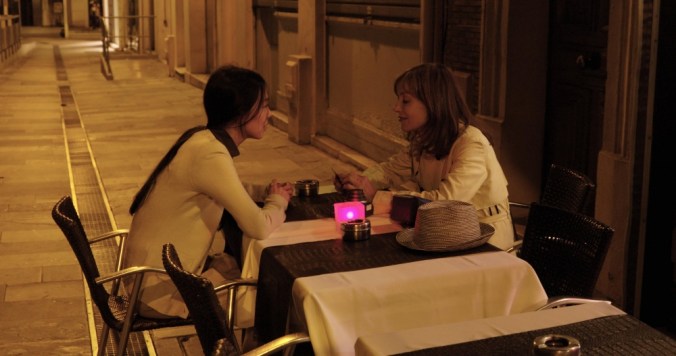
The beautiful Kim Min-Hee joins him in Claire’s Camera as the dubiously named Man-hee. She works as a salesperson for a film company and is selling a film at Cannes when her female boss dismisses her after losing trust in her for some unknown reason. We learn shortly after that Man-Hee slept with the director she works for, So Wan-Soo. She meets Claire, (Isabelle Huppert) who is on vacation, as she is introduced she exclaims, “This is my first time in Cannes.” Claire likes to take pictures with a polaroid camera. She tells her subjects that a photo is a big deal, because when your picture is taken you are changed forever.

Reality and time have a tendency to be intangible in a Hong Sang-Soo film. Sometimes it seems as if we are watching stories from different dimensions. Scenes contradict one another. Repetition and mirroring are commonly employed. Hong never loses control of all the loose ends, but rather opens the film to deeper philosophical readings.

This is my first review of a Hong Sang-Soo film. It feels like I’m just reviewing his films in general, but that’s not so bad. Every Hong film has echoes of another. Each of his films feels equally personal. Stylistically he rarely strays. This is perfect, because you know what to expect going in. You can relax and watch his stellar stable of actors hit beat after beat in long single takes. Charting the dramatic arc of a single scene can be exhilarating, as a conversation can go from small talk to tears to romance and end in a brutal fight. Hong stations his camera near a table full of empty soju bottles and captures the ups and downs with perhaps my favourite use of the zoom lens in cinema. His timing and stubborn insistence to zoom in and out over the course of a shot works for me every time. It’s a trick that shouldn’t work, but Hong knows exactly when and where to do it and the effect is intoxicating.

I have nothing bad to say about Claire’s Camera. It was a lovely break from the heavy festival fare. The cast is wonderful. The broken English provides for hilarious awkward silences and silly conversations. Kim Min-Hee’s series of collaborations with Hong have proven to be some of his best. The confessional nature of these films feels voyeuristic at times, but the lack of distance is courageous.

Funny and touching, Claire’s Camera fits well among the works of Hong Sang-Soo. If you have yet to see his films, don’t sleep on it, you have a lot of catching up to do and he will probably have released three more by the time you finish.

VIFF 2017 – Day 2 – Gukoroku: Traces of Sin

main_traces_of_sin_1-1600x900-c-default

A cold look at the social hierarchy in Japan under the guise of a murder mystery. Tanaka (Satoshi Tsumabuki) is an investigative journalist who specializes in articles about murders. He has become obsessed with a case from a year before, where a family of three was brutally killed, and sets out to interview people close to the victims. The mystery takes an immediate back seat to social commentary as we are treated to a series of flashbacks that piece together the relationships of the victims with their university friends.

Tanaka’s sister, Mitsuko, (Hikari Mitsushima) has been arrested for child neglect, she seems to be working through some kind of trauma from her past. Tanaka’s obsession with his story seems to be connected somehow to his sister’s incarceration. Perhaps he just needs the distraction.

A film told through flashbacks has a danger of being cloying or melodramatic, but first time director Kei Ishikawa manages to avoid this by keeping a distance between the audience and the subject. If you watch the trailer for this film, you will go in expecting a thriller, but there is not a single thrilling moment in Gukoroku. Tension remains low through much of the film and even the somewhat obvious plot twists are somehow presented with no fanfare whatsoever.

I feel this is the strength of the film. The focus on Japanese social status and hierarchy helps it stand out from the slew of similar films that are produced on a yearly basis in Japan. Ishikawa’s keen sense of Japanese double speak and body language provide for some really great gut punch moments. The film falters in it’s final act when Ishikawa struggles to keep all the plates spinning. There is an unfortunate kitchen sink approach to the final act of this film that may have worked in a real thriller, but feels out of place in a drama so seriously focused on a class system in Japan.

Gukoroku is a good film. A strong debut and Ishikawa’s European background and seemingly deep connections, (considering the pedigree of his cast) tells me that we will probably be seeing some interesting films coming from this guy in the near future.

VIFF 2017 – Day 1 – LUCKY

52e7ef1d44
Death is inevitable. For all of us. Many of us go early. Sickness, accidents, unforseen cricumstances interrupt the course of our lives prematurely. Very few are fortunate enough to die of “old age.”

This is explored in John Carroll Lynch’s directorial debut Lucky. A quietly funny, poignant and somehow both bleak and uplifting crowd pleaser about a man coming to terms with his mortality.

John Carroll Lynch is the kind of character actor that you’ve definitely seen in more than a few movies. In recent memory his performance as a lurching, dangerous party guest in Karyn Kusama’s The Invitation, was a treat. His menacing presence was that of a confident, journeyman actor who isn’t afraid to be unlikable for the sake of the film. Here he is behind the camera and his experience as an actor shows in the honesty and humility he draws from the cast of Lucky.

But the real reason we are all here is the titular role played by one of the greatest character actors we’ve ever had. Harry Dean Stanton, perhaps the epitome of the actor that you’ve seen, but don’t know it. A fantastic, long career with roles in some of cinema’s greatest films. Harry Dean passed away two weeks ago and Lucky serves as his swan song. How fitting that at 91, Harry is able to make a final film about a man dying from nothing but age.

Lucky opens with a closeup of a cigarette being lit. We watch Lucky as he goes through his daily routine. He rests his smoke in the ashtray to stretch, drinks a glass of milk from his fridge, and gets dressed. The rest of his day is spent walking around a dusty desert town to a cafe, a convenience store and a bar later in the evening.

Most of what we learn about Lucky comes from his interactions with the people at each of these locations. People great him with a familiarity, and it is clear these are daily conversations that probably sound the same every day. Jim Jarmusch’s Paterson comes to mind as the film cycles through this day-to-day routine. There are some surreal touches, such as David Lynch, who makes a few appearances as a close friend who’s lost his tortoise. I saw a lot of echoes from Jarmusch’s film in style and structure, but Lucky has a more somber and personal tone.

This may well be Harry Dean’s greatest and most honest performance. Physically he looks very weak, as he walks along with an uneven gait, always looking as if he may fall over. His eyes full of longing. We get the impression that this film was made specifically for him to say goodbye and it seems to be both a difficult and cathartic experience. A shot of him lying awake at night, his white, sunken face poking out from his blanket is followed by one of the most touching and beautiful moments in the film at a child’s birthday party.

Few artists have as long and interesting a career as Harry Dean Stanton. Even fewer are given an opportunity to say goodbye with one final piece. Last year’s album’s from David Bowie and Leonard Cohen are good examples of this. We are lucky to have such honest works about the end of life. This brave performance is a perfect cap to a great career.


An Introduction

As autumn arrives to Vancouver, we are once again fortunate to have the Vancouver International Film Festival (VIFF) in our backyard. Hundreds of films from around the globe flood the city for 16 days. We all hold our breath and hope the rain holds for two more weeks.

As a 12 year resident, I’ve attended the VIFF every fall. I’ve been fortunate to get the access and exposure to world cinema that I could never have imagined as a teen in my hometown of Thunder Bay, Ontario.

Every year I have written short reviews of the films I see at VIFF for my friends, family, and my own personal records. I hoped to convince people to maybe watch something they wouldn’t have heard of otherwise. Generally feedback has been positive, but Facebook is a safe place and this year I want to challenge myself and share my opinions publically.

My goal is to write some longer reviews and some shorter capsule reviews on a daily basis. I am mostly focusing on foreign narrative films, but will also be seeing some from Canada as well as documentaries.

Stay tuned, a review of “Lucky” will be up by tomorrow.


-Taylor Bishop