VIFF 2025 Review – Akashi

In addition to previewing hundreds of films every year for festivals, I’m also privileged to have some very talented friends, who sometimes give me a peek into what they are working on. In the case of Akashi, I’ve been fortunate to call writer/director/star Mayumi Yoshida a friend for over a decade. I remember meeting her in an acting workshop, where she instantly stood out as somebody to watch. Years later, she created NeOn, a theatre piece that was eventually adapted into her debut feature film. I’m so proud and happy for her, and I can also say without hesitation that Akashi is a beautiful, deeply affecting drama that has made me cry every single time.

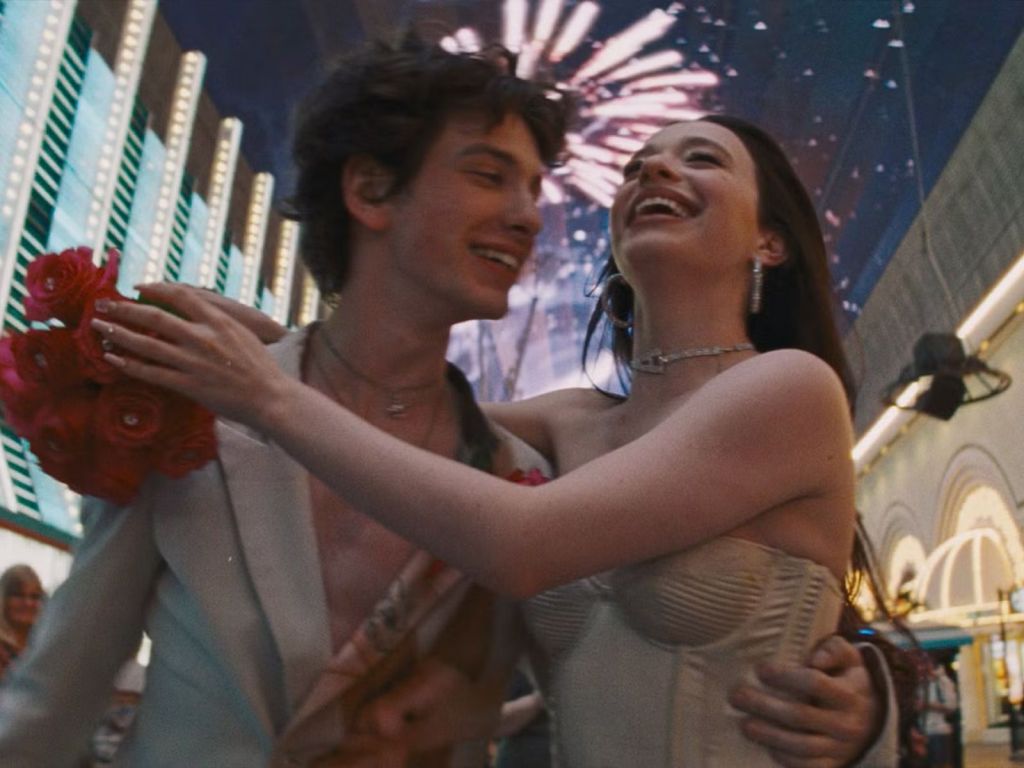
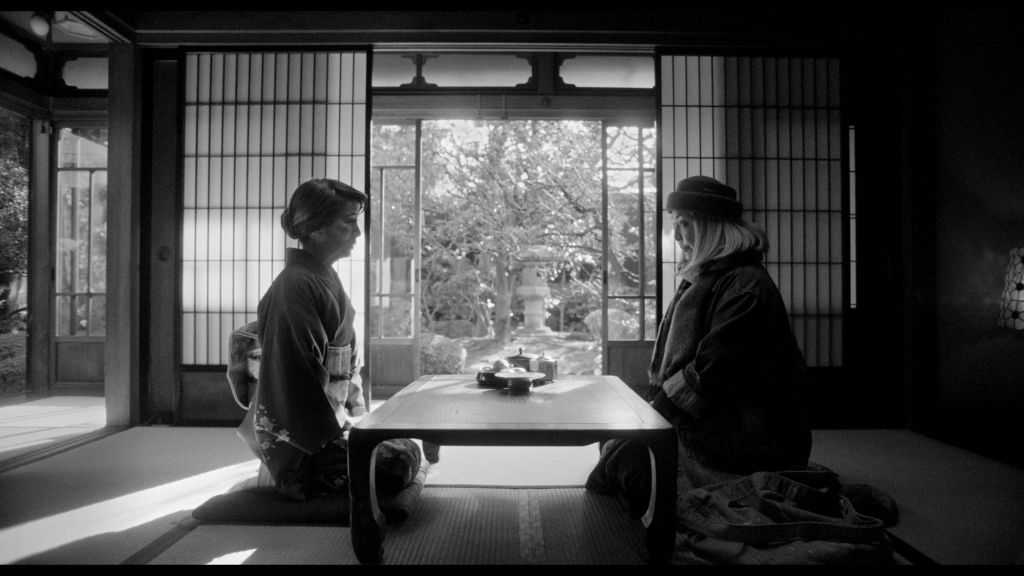
Kana (Yoshida) is a struggling Japanese artist living in Vancouver, who travels back to Tokyo to attend her grandmother’s funeral. Her first time back in a while, she’s somewhat nervous about reconnecting with loved ones. Her family, while supportive, are critical of her lifestyle and worried about the slow progress of her art career. She runs into her ex, who was supposed to accompany her abroad, but chickened out. Amidst all of this, Kana uncovers a secret that her grandmother took to the grave and that changes everything she knew about her family history.

Exploring themes of love, family, memory, and distance, Akashi shifts between Kana’s trip home and scenes from the past (shot in stunning black and white) as she uncovers more about her grandparents. Her story resonates deeply with me and the tension between Kana’s cultural heritage and her life abroad is something I can strongly relate to.

Having two places to call home is a blessing that I will always be thankful for, but with it comes a disconnect created by time and distance. While my wife and I live in Canada, her parents get older, our nephew Kanata grows up and the country slowly shifts and changes. We are lucky to be able to visit as often as possible, but the feeling of missing something important is unavoidable. When Shino and I watched Akashi a year ago, we both broke down crying, “That’s me,” she said, carrying all the weight of a decade spent away from home.

The truth is, Mayumi has made a film that will be recognizable to anyone who has left home. The mad dash to pick up the pieces and reconnect upon returning. Experiences turn into memories – stories of what once was. Kana processes her feelings about leaving and returning, but is also left to struggle with new family secrets, which expose a generational cycle of regret and lost love. By the end of her visit, she finds some way to bridge the gap that has grown between who she is and who she was and more importantly, finds a way to focus that into her art.

And that’s exactly what Mayumi has done with her film. Art as an act of love. To create is to remember – to keep alive – stories, memories, people. Akashi’s revelations are heart wrenching, but from them come lessons about living your life in the present, holding onto and learning from the past and using these moments to build for the future. 


Akashi has it’s world premiere tonight at the Vancouver Playhouse and tomorrow (Oct. 6th) on Granville Island. Tickets are still available here.
VIFF 2025 – A Love Letter to Sophy Romvari’s Blue Heron

“Your picture is still on my wall – The colours are bright as ever.” 

-Daniel Johnston

I started this blog years ago as a way to practice writing, holding myself accountable and to score a “free” VIFF media pass. Over the years, I transitioned to the VIFF screening committee, and eventually became a programming consultant, but maintained this blog to keep myself honest. I’ve watched well over 500 screeners between VIFF and Fantasia in the past 5 years, many of them terrible, some are good, a few are incredible. For me, Sophy Romvari’s Blue Heron stands above them all.

Romvari’s 2020 short film Still Processing explored her grief over the deaths of two older brothers as she sifts through a box of old family photographs and negatives hidden away by her grieving father. As she digitizes the photos, she revisits her memories and begins the process of healing. Blue Heron serves as an expansion upon her previous work, returning to a childhood period of intense emotion and confusion.

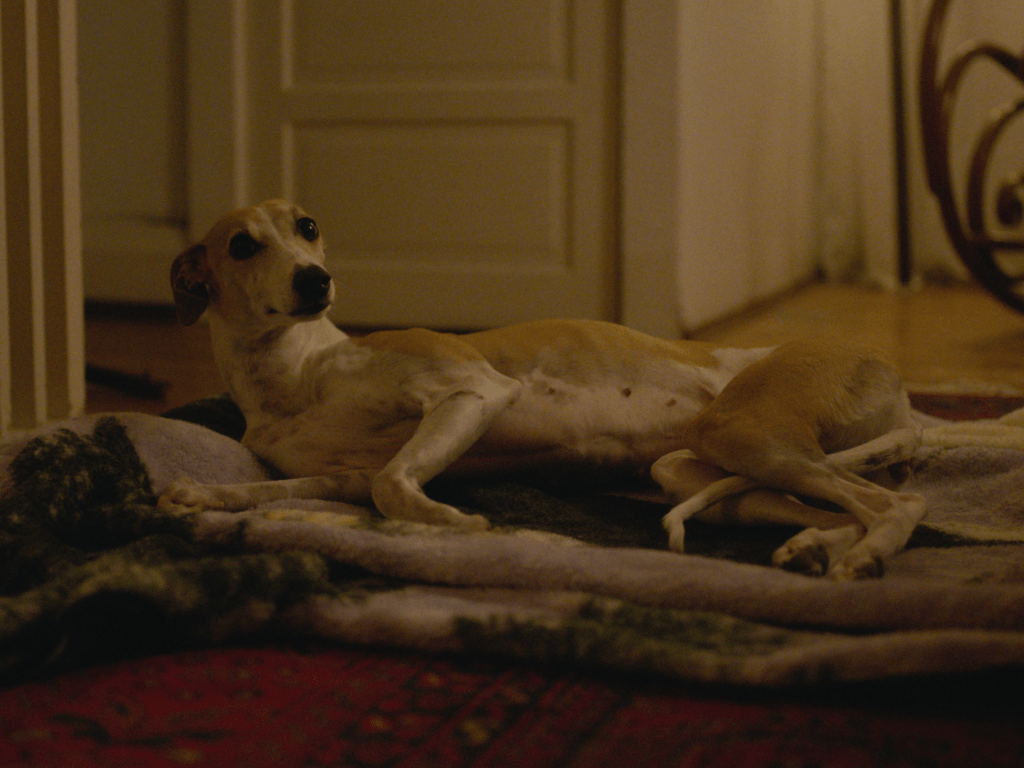
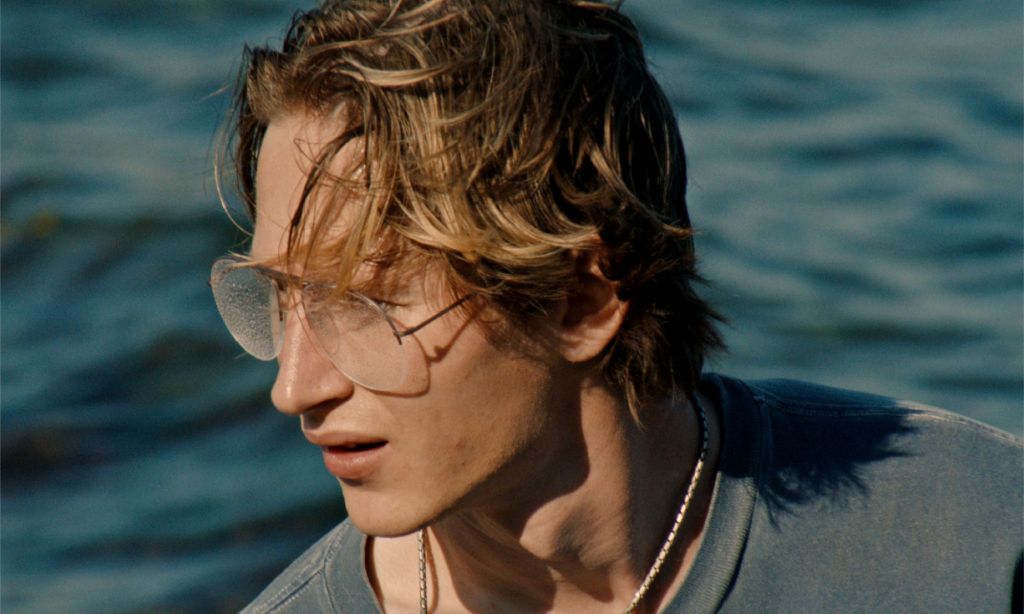
Presented as a memory of eight-year-old Sasha, (Eylul Guven) who arrives on Vancouver Island with her Hungarian immigrant family. Adult Sasha (Amy Zimmer) recalls her eldest brother Jeremy (Edik Beddoes), a “troubled” young man, tall, handsome with eyes full of life behind his thick-lensed glasses – the walls of his room covered with his hand-drawn maps – beautifully detailed, charting imaginary worlds existing inside his head. Quiet, brooding and withdrawn, his parents are at their wit’s end trying to get through to him and the new environment doesn’t seem to be helping matters.

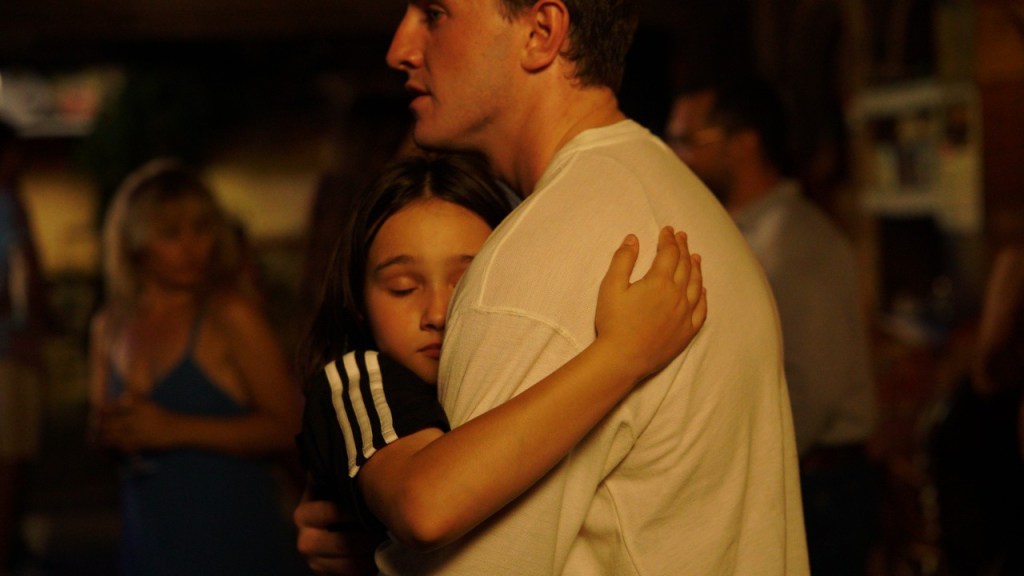
Awash with 90’s nostalgia, we see Sasha and her siblings adjust to their new home over their summer break. Lazy days spent with her brothers watching TV, going to the beach, and playing with MS Paint on her dad’s PC. Her father documents everything with cameras and video recordings, teaching his kids to develop photos in his darkroom and allowing Sasha to play with his camcorder. One day during a water balloon fight with other neighbourhood kids, Sasha witnesses Jeremy arriving at the house in handcuffs after getting caught shoplifting – his behaviour becomes increasingly worrying, and his parents fear he could become a danger to himself and their family. A social service worker arrives to assess the situation and proposes voluntary placement. 

We pass through time to meet adult Sasha, who is working on a piece about her brother. She films a roundtable with a group of social workers and shares her brother’s story, asking them how things may be handled differently and what resources could be provided by current day social services. A transcendent BC Ferry voyage takes Sasha back to the Island to reassess her memories and see her childhood from a new angle. The warmth of the film’s first half contrasts with the cold inevitability of what follows and incredibly, Romvari finds a way to meld the tonal shifts into a poetically moving and profound final act.

I’ve been thinking about how to write this review since I saw this film back in May. Completely devastated by the end credits, I took months to consider before revisiting the film last night. I’ve been hesitant to share personal stories here recently, as I have been processing some personal hardships in my own family, but that’s really what this blog is for and in honour of Sophy’s honest and personal film, it feels appropriate to share my own stories. 

For me, I was reminded of my cousin Steven. The oldest kid in my family, more than 10 years my elder, I grew up with him as a big brother who had always been there. Handsome, impossibly charming – he was a high school quarterback, popular with boys and girls – he had the power to light up a room upon his arrival — he once caught the biggest walleye I’ve ever seen. I remember witnessing cracks in his exterior, but was too young to understand the stakes. I remember his bandaged wrists as a young adult and the whispered stories of why he had them. Snippets and vague memories flood my mind and call into question everything I thought I knew about him. I suppose he was “troubled,” as well and the system that was in place to protect him, failed him time and time again. 

Steven took his own life before his 30th birthday. He would have been 46, now. His mother Margaret – my aunt – was the one who found him. I remember returning to Thunder Bay for his funeral, seeing her and thinking she would never be the same – never recover. Margaret is one of the strongest people I know and over the two decades since Steven’s passing, has managed to somehow pick up the pieces of her life and family and find a way to heal – whatever that means – to celebrate the light that her son brought into people’s lives and acknowledge the pain he carried with him. Healing in the face of intense grief seems impossible at times, but the women in my family have proven otherwise.

In Blue Heron Sophy Romvari wrestles with the nature of time. The inevitability of loss, pain, hardship – love and all the mess that comes with it – the impossibility of returning and changing that which has passed. She charts a path towards healing, forgiveness and understanding. When “troubled” musician Daniel Johnston sings “some things last a long time,” you get the feeling that he’s embracing the beautiful and the ugly aspects of life. There are no easy outs here – the tragedies that befall her family are seemingly unavoidable, but in creating this film, Sophy proves that there is always time to process, learn and recover. 


Blue Heron is completely sold out over the three VIFF screenings scheduled at the time of publishing. I’m very excited to be moderating a Q&A with Sophy 1PM on Sunday the Oct. 5th at the Cinematheque. Here’s hoping more screenings will follow.

VIFF 2024 REVIEW – CHERUB


I want to visit another diamond in the rough that I happened across during my VIFF screening this year. Of the 130+ films I screened, there were perhaps 6 films that stood out as being something special. Perhaps the most enigmatic and surprising of these was Devin Shears’ Cherub.

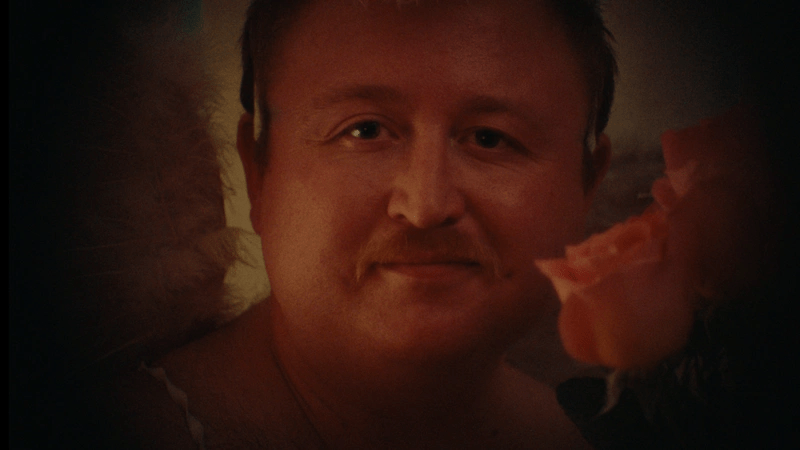
Benjamin Turnbull stars as Harvey, a lonely, overweight, straight man who works in the bio lab at York university. He moves through his day with little to no interaction with other people. If it weren’t for Harvey being constantly in frame, you’d think he was completely invisible. One day, while browsing an adult book store, Harvey stumbles upon a gay black and white rag called “Cherub,” billed as a magazine “for big men and their admirers.” Starved for affection, he decides to submit a photo of himself to the magazines “Cherub of the month” contest.

The beauty of Shears’ film lies in the gentle and caring way he portrays Harvey. A lesser filmmaker would have made fun of him, but in Cherub Harvey is seen as beautiful, both inside and out. The love that Shears’ has for his protagonist is clear from the outset, framing the world around his presence. While Harvey lacks confidence, he isn’t without humanity and Benjamin Turnbull’s performance paints a portrait of a man suffering from intense loneliness, but whose soul is ever present and available to us as an audience. In a world that feels less and less forthcoming with kindness, it’s a joy to see a film that treats its subject with such respect and admiration.

An ambient, calming experience, Cherub is dialogue free, but shines with a glistening score that highlights Harvey’s solitude and creates a warm and soft tone throughout. Shears made Cherub as his thesis at York, but his film is so much more than a thesis film. A simple, amusing premise unfurls to reveal a non-judgemental and deeply affectionate story about the power of affirmation. If art is an act of love, then Cherub is a piece of art of the highest order.

I’m excited to share this film with VIFF audiences and am looking forward to this afternoon’s Q&A with Devin and Ben.

VIFF 2024 NOTES – Days 1-3


I managed to take in 10 films over the festival’s first three days, alongside conducting a Q&A on the evening of day 3. Here are a few highlights from the festival so far.


Anora
It shouldn’t come as a surprise to hear that Anora is one of the year’s best films. The hype at Cannes was huge and most weren’t surprised when Sean Baker took home the Palme D’or. Mikey Madison is a force of nature as Anora (Ani) an exotic dancer who scores big when she meets the son of a Russian oligarch. Everything goes to hell when her new In Laws find out about the marriage and fly to New York to intervene.

Pure farce with Baker’s signature style of controlled chaos. A perfect mix of tension and humor, aggression and love, intensity and tenderness. This is undoubtedly the film of the year for me at this point and I really don’t see anything on the docket that has the potential to top this. I am always open to being wrong on that front, of course.

Perhaps a second viewing will inspire me enough to write more thoughts, but this was the perfect way to start my VIFF 2024 and has set the tone through the rest of the festival so far. The media screening was sparsely attended, but the usually quiet crowd at those screenings was loud with laughter and gasps throughout. Quite the invigorating experience.


Rumours
The new Guy Maddin film is quite the surprising turn for the director. Following a G7 Summit meeting where the world leaders have joined together to write a statement over dinner in a scenic gazebo. Things go bad when they are abandoned at the gazebo and the world undergoes some sort of apocalyptic event. Sounds vague? That’s intentional. The leaders of the 7 countries are all uniquely aloof and the statement they intend to write seems to be more in the nature of “Concepts of a plan” than anything substantial or useful.

Things escalate in the most bizarre ways and the group is left to fend for themselves in a dense forest, fighting their way back to the estate hosting the summit, so they can deliver their declaration to what little is left of the destroyed world. The experience is outrageously on the nose, but nevertheless hilarious and perhaps even funnier for it’s heavy handed approach. This was a perfect follow up to Anora. An absurd and over the top comedy that tried to do something completely different, but with an equal level of commitment.


Conclave
The media screenings for the first week wrapped up with Edward Berger’s papal drama. Ralph Fiennes stars as Cardinal Lawrence, who is tasked with organizing the conclave to decide the new pope. Full of political intrigue, the Cardinals and higher-ups of the Catholic Church whisper to eachother in the hallways of the Vatican, conspiring amongst themselves to steer the direction of the church to their desired pathway. Traditional, conservative views clash with the younger progressive values of the new church and the conclave finds itself at an extended standstill.

Unable to organize his compatriots to agree on a progressive candidate, Lawrence begins to uncover a trail of secrets and lies that threatens the sanctity of the process and leads to a high stakes faceoff between different sects of the papacy. Conclave is taut and effective and serves as a unique look into a process that is heavily shrouded in mystery. Likely to be present during awards season next year, I’d recommend Conclave for people who like a classic political thriller with a stalwart cast.

VIFF 2024 Review – The Heirloom

My past few years of screening for VIFF and Fantasia have afforded me some pretty exciting sneak previews of upcoming indie films, but rarely am I as excited to watch something as I was when Ben Petrie’s The Heirloom showed up in my inbox back in March. My first experience with Petrie was through his excruciatingly funny 2016 short film Her Friend Adam, which my friend Ryan showed me the first time we sat down to watch movies together, shortly after the COVID lockdown. We met volunteering at the Cinematheque and instantly bonded, becoming great friends and writing partners. Years later he accompanied my wife and me to Montreal for Fantasia, where we saw Grace Glowicki (Petrie’s partner and co-star of The Heirloom) in Mary Dauterman’s hilarious, gross-out, cat movie Booger. I was hooked after circling back to Glowicki’s wild first feature Tito.

Alongside making a new friend, the time in quarantine brought along new pet projects. I took up brewing premium coffee and spent more time writing, leading to new employment opportunities in third-wave coffee and festival programming. The Heirloom begins with a similar jumping-off point as we meet Eric and Allie, stuck inside and with too much time on their hands. Eric fills the days working on a screenplay but seems to spend much of his writing time with his pants down and the close-all-tabs hotkey at the ready. Allie is bored out of her mind and has her heart set on getting a dog. Her early attempts to discuss pet adoption with Eric are met with convoluted ethical debates and scheduling issues. The comedic chemistry in these early scenes highlights the gap between Ben’s neurotic, high-strung Eric and Grace’s carefree Allie. 

Eric finally agrees to adopt but on his terms. His detailed research and planning lead the couple to a traumatized rescue dog from the Dominican Republic. They follow Eric’s plan to the letter, avoiding eye contact and talking when they pick up the dog from the airport, hoping that presenting a calm demeanour will help the new arrival warm to its surroundings. They name the dog Milly and eventually, she opens up to the couple, though her new diet (Eric is vegan) doesn’t seem to agree with her stomach. One night, while making a home movie about his pet and his partner, Eric is hit with a flash of inspiration and decides to scrap his screenplay and refocus on making a movie about Grace and him raising their dog.

This is when things get interesting as The Heirloom evolves from a hilarious screwball comedy about a couple in isolation and their dog into a deeply personal and metafictional piece that blurs the lines between fiction and reality. Trapped between two versions of himself (A self-described workaholic and family man) Eric’s film takes over the proceedings, giving us multiple retakes of moments that had come before. Milly’s gastrointestinal issues get worse and the pair stress over her bowel movements and frequent trips to the vet. Structurally, the film unravels, as the couple drifts further apart, and we are often left wondering if what we are watching is real or “acting,” but what better way to dramatize such a cataclysmically surreal experience as the lockdown?

Months after seeing The Heirloom, my wife and I adopted a cat. I revisited the film a few weeks later while writing about it for the VIFF program and saw it echoing through my own recent experiences. Not only had I taken on Eric’s obsessively detailed and controlling approach to pet training, but we also found ourselves strangely obsessed with our cat’s bowel movements. The day our little furball Katsuo finally parked herself in her litter box and had her first poop was the highlight of the summer.


I’m full of excitement this morning, as I feed my cat her breakfast and get myself ready for day 1 of VIFF. On day 3 (Saturday Sept 28th) I’ll have the privilege of moderating a Q&A for The Heirloom with Ben Petrie at The Cinematheque. Having my first Q&A at my favourite theatre in the city with a director I admire is a priceless experience and I’m eager to share it with everyone. Get tickets to The Heirloom HERE.

VIFF 2023 – PRE-FEST REVIEWS II

VIFF 2023 starts tomorrow and I wanted to follow up my documentary reviews with a couple narrative films that I had the honour of pre-screening for the festival.

WHEN ADAM CHANGES – JOËL VAUDREUIL

Adam is a 15-year-old boy with a strange condition that causes his body to change based on the negative comments of other people. This all starts with his hateful grandmother who never misses a chance to comment on Adams’s weight or his “long torso.” The film opens in the hospital, and Adam’s family is gathered around Grandma’s death bed when she sits up, scans the people in the room, sees Adam, and says, “I always said that boy had a long torso,” before she keels over and dies. Her last words. Adam’s torso, already bent, long, and uncomfortable-looking, stretches a bit more.

What follows is a delightful, off-beat coming-of-age story about the power of words and the pain of growing up different in 90s Quebec, all told through janky, hand-drawn cartoons reminiscent of the same era’s MTV Animation style. Full of cringe-inducing nostalgia and awkward teenage confusion, When Adam Changes is a surprising and hilarious film that had me laughing and crying in equal measure.

Following Adam through his summer break, we witness him nervously navigating the horrors of adolescence. He gets a summer job looking after his father’s boss’ home, while their family is away on vacation. The young rich boy of the house takes him on a lazy tour, showing him all the cool stuff he owns and reminding Adam that he’s not allowed to touch any of it. He’s mostly left to clean the house and tend to the limbless cat, who spends her days carefully propped between her litter box and food bowl. He sneaks peeks at a dirty magazine he finds wedged between the rich kid’s mattress and fixates on a particular photo that reminds him of his crush, the most popular girl at school.

It’s all an embarrassing mess and it’s also painfully relatable. Adam is wracked with guilt over an experience he had with a younger, neighbourhood boy that ended with the boy getting severely injured. Now with a permanent, disfigured grin, the young boy wordlessly roams the streets at night, a long metal pole in his hand, scraping on the sidewalk, a constant reminder that haunts Adam. There’s also the question of who keeps throwing bags of dog droppings into the trees across the street…

Somehow director Vaudreuil manages to tie all these bizarre, silly ideas together into something that’s both hilarious and profound. The grotesque aesthetic and the deadpan voice acting perfectly fit together to match the extreme ends of banality and horror in the teenage experience. When Adam Changes is a one-of-a-kind debut from a Canadian animator that I hope to see much more from in the future. I was completely floored from the moment I saw this film and I’m so excited to have a chance to talk about it with people, now that it’s been released.

I DON’T KNOW WHO YOU ARE – M.H. MURRAY

Benjamin is a queer, black man who lives in Toronto and makes ends meet by teaching private music lessons in his home. After a night out with friends, he meets a man on his way home and things escalate quickly, as he is sexually assaulted and left bleeding in the streets. The next morning, wracked with grief, he tells his best friend what happened and she suggests he get some HIV-preventative medicine.

We follow Benjamin as he tries to acquire PEP treatment at a clinic, having to answer uncomfortable questions and racist comments, he finds himself at a dead end when the expensive meds are too much for him to buy from the pharmacy. The rest of the day Benjamin does what he can to scrape together the money he needs and slowly resorts to more desperate and embarrassing measures, all while pushing back against a broken system.

Intense and urgent, I Don’t Know Who You Are explores barriers to access to medicine and the paranoia, fear, and mistreatment that victims of sexual assault have to deal with in the days following their trauma. There is a risk in exploring such heavy themes that this film could come off as trauma porn, but director M. H. Murray incorporates soft, delicate cinematography and a strong ensemble cast that resonates warmth and love throughout. In the end, we are left with a calm and forgiving experience that doesn’t pull any punches or offer any easy-outs yet offers a possibility of hope and grace.

This was one of the first films I screened for VIFF this year and set the bar very high for every Canadian feature that I’ve watched since.

VIFF 2023 – PRE-FEST REVIEWS

The 2023 edition of the Vancouver International Film Festival is almost upon us! I’ve been wrestling with the schedule trying to fit in all of the films I’m hoping to see. Luckily for me, this year I have much more free time than last, so I hope to see many more films and write more reviews.

This year is a bit different for me, as on top of this being my 4th year with Media accreditation, this also marks my first year on the VIFF screening committee. I’ve been screening films for the Fantasia Film Festival in Montreal for a few years, also and this basically means I watch A LOT of screeners throughout the year to help the festival programmers narrow down their selection.

Of the eighty or so publicly submitted screeners I watched, a whopping 5 were selected for screening at this edition of VIFF, so this year, instead of my usual fest preview of films I’m hoping to see, I’m going to post a few reviews of the selected films that I happened to love. Today I’ll start with a couple Canadian documentaries.

MR. DRESSUP: THE MAGIC OF MAKE-BELIEVEROBERT McCALLUM

I was quite surprised when this film showed up in my inbox. Produced by Amazon Canada, this doc feels like the type of film that shoots its way straight up to the VIFF Special Presentations section and is a bit of a no-brainer given the subject. Ernie Coombs A.K.A. Mr. Dressup was a national treasure and his 30-year run on Canadian children’s television was hugely influential on generations of Canadian kids.

As a child of the 90s, I grew up watching Mr. Dressup and even aged out of his content by the time he retired from the screen in 1996. It never ceased to amaze me that the man I grew up watching was the same guy entertaining my parents, decades earlier when they were kids in the late 60s.

The Magic of Make-Believe follows Coombs from his early years as a puppeteer who joined Fred Rogers when he moved to Canada to start a TV series for kids on the CBC. Rogers found quick success and moved back to the States to continue what he started and Ernie Coombs was left to start a spin-off series named after a character he had been playing on the Mr. Rogers show: Mr. Dressup. Powered by a tickle trunk full of costumes, a cast of friendly puppets, and his imagination, Mr. Dressup went on to capture the minds of Canadian children for three decades.

The documentary itself is a straightforward and easy-to-watch story about an artist who wanted nothing more than to positively influence the younger generations. We hear stories about his work ethic, his philosophy, and the way he prioritized teaching children above all else. Former collaborators, friends, and family comment on his legacy and his uncompromising approach to his work. Coombs had his fair share of hardships later in life and we see how the tragic loss of his wife affected him in his retirement years.

In the end, we are left with an affecting and heartfelt portrait of a man who gave his life to teaching children how to be more generous, more kind, and more loving. His legacy is cemented in the hearts of millions of Canadians and is sorely missed in today’s mode of children’s programming.

UNION STREET – JAMILA POMEROY

Union Street explores the history of Vancouver’s black community and the systemic erasure of a culture from the Strathcona neighbourhood in Vancouver’s East Side. Once a vibrant community of African Canadians, the neighbourhood was displaced upon the construction of the Georgia Viaduct right through the middle of the area. Union Street reveals a story of racism in Vancouver that is rarely talked about in the local history books.

I work in Strathcona and often see Union Street director Jamila Pomeroy, as she is a regular at my workplace. Her film is an informative documentary about the black experience in Vancouver, as well as a resounding celebration of black joy and black entrepreneurship. Union Street serves as a positive and educational piece about social justice that invites the audience to engage with and recognize the importance of black identity and cultural diversity in Vancouver.

The film is structured as a series of portraits of members of Vancouver’s black community. Entrepreneurs, artists, musicians, and designers; the subjects are varied and offer unique insight on their experiences, but they share a similar hardship as African Canadians in a city that doesn’t support them.

This also serves as a personal documentary, as Jamila turns the camera onto her father, a Kenyan immigrant who tells his tale of coming to Canada as a young, black man. Not only is he incredibly charming, but his story of arriving in Canada and dedicating himself to helping other African immigrants find their place and integrate is exemplary of the kind of understanding that this film asks of us.

A graceful and illuminative film about the importance of cultural spaces and identity in Vancouver. A celebratory call to arms that asks us to consider the spaces we live in and the people who live there. Gorgeous from the opening shot. The golden, sun-bathed streets and the bright, smiling faces of our beautiful city.

“Today is the day to celebrate our differences.”

VIFF 2022 – Reviews II

Holy Spider – Ali Abassi – Iran

Based off true events surrounding Saeed Hanaei, a serial killer who murdered 16 prostitutes in Mashhad, Iran between 2000-2001, Holy Spider is a frightening and fresh take on the serial killer procedural drama.

Iranian born and Denmark based filmmaker Ali Abassi follows up his insanely original Swedish fantasy film Border with another darkly funny and brutally realistic film that breaks from the formula and structure of a crime thriller in fun and inventive ways. Split between two POVs, we follow Rahimi (Cannes best actress winning Zar Amir Ebrahimi) a female journalist who arrives to Mashhad to write an investigative article on The Spider Killer. Meanwhile, we also meet Saeed (Mehdi Bajestani) who is instantly revealed to be the killer as we witness him haphazardly strangle a prostitute in his apartment stairwell and dispose of her body, rolled up in a carpet, on the side of the road.

Abassi wastes no time introducing us to the killer and eliminating any distracting “mystery” from the proceedings, as it becomes evident that his focus is not on the murders or the investigation, but rather the cultural implications of the killer’s mission and the fallout of his eventual arrest. Saeed is a husband, father of three and a construction worker. He sets out at night on his motorcycle every week when his wife goes to visit her parents. Picking up a lone woman, he brings her back to his home and strangles them with their own headscarf. He calls the media and lets them know where to find the body. Nobody at the paper even bothers to record most of these calls. The police don’t seem to be in a hurry to stop him, as they see his work as a favour.

Rahimi, frustrated with the lack of effort from the police and media, takes matters into her own hands and attempts to take down the Spider Killer herself. What follows subverts expectations and shifts the tone and message of the film into a scathing commentary on the treatment of women in Iran. Following his arrest, Saeed confesses fully to his crimes, which he sees as an aid to society, justified by the tenets of Islam. His message reaches the ears of Iran’s most devout and is met with praise by the populace who view his work as a welcome cleansing.

Holy Spider is a difficult film to pin down or define. It plays with expectations and structure, it is so full of dark and funny tonal shifts and remains engaging throughout without having to lean on the traditional tent poles of the genre. By the end, the message is clear and harrowing. The screening I saw at Vancouver Playhouse was very well attended and as the credits rolled and the applause picked up, the audience erupted into chants of “Woman, Life, Liberty” in Persian. In the pitch black darkness, the women of the audience shouted together in protest and support, which only underlined the importance of a film like Holy Spider.

VIFF 2022 – Mini Reviews I

We’ve reached the half way point of the 11 day festival. I’ve had the opportunity to check out a half dozen screenings and was lucky to see a few movies that I enjoyed. Here are a few thoughts on some of the flicks I liked so far.

Aftersun – Charlotte Wells – UK

Eleven year old Sophie is on holiday with her dad at a resort in Turkey. Her father (Paul Mescal) is quite young himself, and early on they are mistaken for siblings. They laze around the pool, play billiards and watch the endless, colourful parachutes sail around in the sky above.

The story is told as decades old memories of the now adult Sophie, as she reviews footage shot on a 90s camcorder during the trip. Her father is loving and kind, despite some dark tension he seems to be carrying with him throughout the trip. Slowly we uncover some of this darkness and learn more about the significance of Sophie’s recollection of the vacation.

Some classic, heartwarming, coming of age moments that are underscored by a heavy, brooding energy. The central performances by the young Frankie Corio and Paul Mescal are highlights, as the estranged father and daughter duo find ways to connect, despite their relative distance from each other.

Personal and true to life, Aftersun is a warm, colourful depiction of a very real, very tragic story. From the outset, it’s clear there is more to this simple film than meets the eye and the eventual, emotional finale is satisfying and heartbreaking.

Banshees of InisherinMartin McDonagh -UK

Set on the fictional island of Inisherin off the west coast of Ireland in 1934, The Banshees of Inisherin tells the story of two life-long best friends who reach a sudden end in their friendship. A black comedy with a fair share of laughs and a slowly building, tense situation that clearly will only end badly.

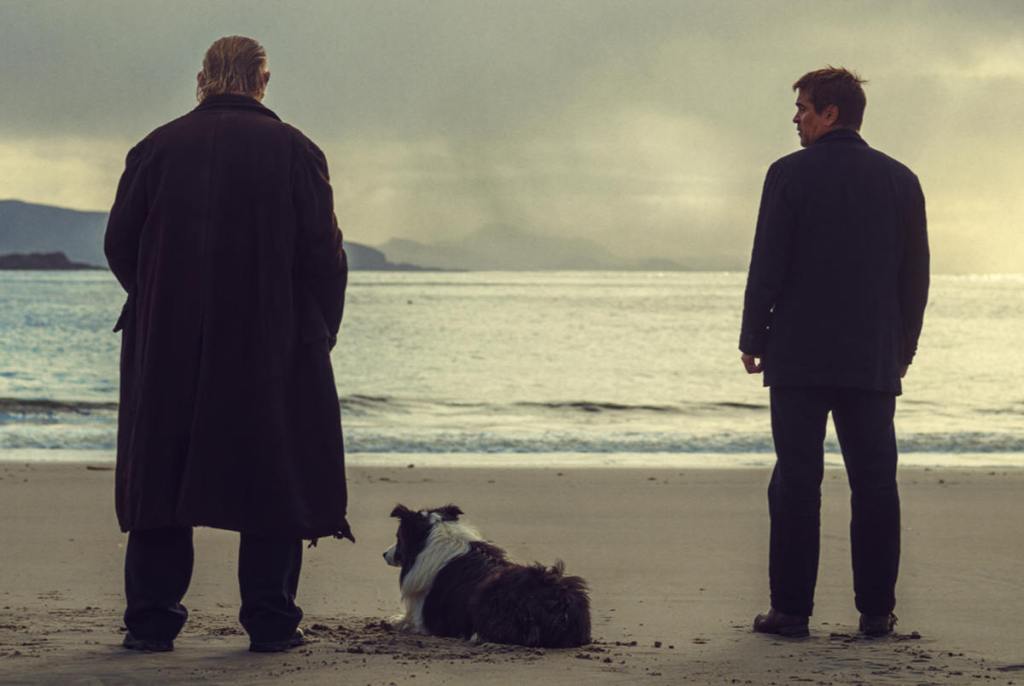
Padraic (Colin Farrell) is heartbroken to find that his best friend Colm (Brendan Gleeson) is no longer interested in being his friend. It seems the older Colm has reached a point in his life that he can no longer waste time chatting with Padraic every night over a few pints and would rather spend the rest of his time composing music on his fiddle. As Padraic tries to repair the cracks in their relationship, Colm stands his ground and insists that they are finished.

It seems that Padraic is dull and perhaps only a step up from the village idiot, Dominic Kearney (Barry Keoghan) who offers Padraic advice on how to repair the rift. Unfortunately for Padraic, there is no way through to his old friend, who has stubbornly drawn a line in the sand. After a few attempts to reconnect, Colm decides that his only option is to set a boundary with bloody consequences. Meanwhile, across the water, a civil war rages on the mainland, the sounds of cannon fire and the distant smoke carries in the air.

I really enjoyed Banshees. Reminiscent of McDonagh’s earlier stage plays, his dialogue feels more at home in Ireland and the big emotional stakes feel more grounded, despite the absurd operatic weight behind everything. Farrell and Gleeson have an incredible dynamic and live up to the promise of their previous work together in McDonagh’s In Bruges. A well paced, darkly funny chamber drama with gorgeous landscapes and biting dialogue, Banshees of Inisherin benefits from lower stakes than in previous McDonagh films, but still finds a way to feel immediate and full of consequence.

VIFF 2022 – Preview

Here we go again! Summer has come to an end, the weather is turning and that can mean only one thing. Time for another 11 days of cinema from around the world.

Admittedly, I’ve been a little bit behind on my research for this fest, as I’ve been away from Vancouver for most of September visiting my family in Japan. Our time here has been so lovely and I can’t say I’m excited to return to Canada, but as I always say VIFF is my favourite time to be in Vancouver and the prospect of seeing some new films will go a long way to helping me settle back home.

Today I thought I would preview a couple films that I’m excited to have at the festival. One film I haven’t seen, but have heard so much about and one film that I am fortunate to have already seen and am excited to be able to discuss with friends who will finally have a chance to watch it.

Anyox – Jessica Johnson, Ryan Ermacora

Jessica and Ryan are a Vancouver based duo whose previous works have been screened in various VIFF short film programs over the past eight years. I’ve had the pleasure of seeing all of their shorts and am particularly fond of 2019’s Labour/Leisure and Ryan’s 2017 solo project The Glow is Gone (featuring Jessica in the lead role). Their work focuses on the conflict between the natural world and the work of humans and industry in subtle and profound ways. They approach their films with a focus on structure and landscape photography. I am honoured to call these two artists my friends.

Anyox is Jessica and Ryan’ first feature and I’ve been fortunate to hear about the production process over the last couple of years. Their subject, Anyox, BC is a remote town in Northwestern BC. I use the term “town” lightly, as Anyox has a whopping population of two, but for 25 years in the early 1900’s it was a bustling mining town, home to 3000 residents. By 1935 the demand for copper had dropped and the mines were shut down and the town abandoned. The film studies the history of the town’s industry, the labour relations and the environmental impact of the abandoned mining facilities.

I’ve been waiting to see this documentary for quite a while now and have had the chance to ask all sorts of questions about the filmmakers’ process. So much research has gone into this film. So much time spent poring through archives and libraries for old footage, microfiche and photographs. The filmmakers went to painstaking lengths to unearth as much info about Anyox as they possibly could. Their work has a way of speaking for itself, foregoing exposition for tone and visuals. There is an almost timeless quality to their short films that I can only imagine will translate to the feature length. I’m always struck by their images, the natural light, the delicately paced editing. It is no surprise to see this film getting early praise including the longlisting on the DGC’s Jean-Marc Valee award earlier this month.

An essential study on the history of the unceded lands we live on. I have no doubt that Anyox will be a beautiful and informative film that should prove to be a big step forward for these talented and incredibly intelligent filmmakers. Anyox is playing at the Van City Theatre on Sept. 30th and the Cinematheque on Oct 3rd.

The Novelist’s Film – Hong Sang-Soo

This wouldn’t be a VIFF preview if I didn’t at some point get excited about an upcoming Hong Sang-Soo film. The prolific director’s 28th feature is full of themes and images that should be familiar to fans of his work, but that should be expected at this point from a filmmaker who is known for continuously repeating himself. The differences from one Hong film to another can be quite subtle, but I would argue that this represents one of the biggest departures or evolutions in his work since he found his style (somewhere around film #3 or #4). A few jarring editing choices early on are a welcome surprise and while things stay on the rails, for the most part the closing passage is a wonderful coda to a very personal film.

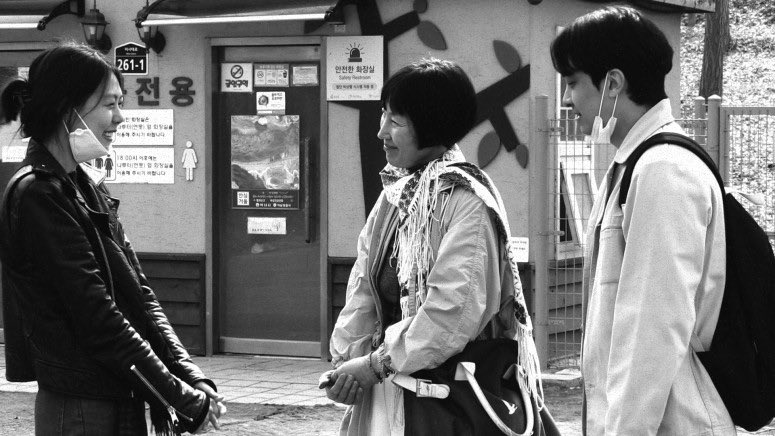
Jun-Hee (Lee Hye-Young) is a very respected novelist. She is on vacation in a small town outside of Seoul. She visits some old friends and takes a break from her work. One day while walking through a park, she happens to spot an actress, Gil-Soo (Kim Min-Hee, who shares a romantic and creative relationship with the director that is the source of much controversy in South Korea) and she approaches her to express her admiration. The respect is mutual and when Jun-Hee impulsively asks the actress (who left the industry after a scandal) to star in a short film that she’s just decided she wanted to make, a friendship is struck and the plans are put into place.

Jun-Hee doesn’t have a script, nor does she have a plot or any idea of what the film will be, but insists that she MUST make it with Gil-Soo and that the rest will come later. This should ring familiar for Hong Sang-Soo fans, as the director’s unique process involves an early morning of coffee and writing, rehearsals and then shooting of the mornings scripts come later in the day, likely followed by boat loads of soju. The scripts are written entirely during filming and neither the actors, nor the director know where the film is going, or when it’s finished, until they get there. This kind of process requires extraordinary trust and an acute understanding of human nature.

Things progress as one would expect in a Hong film, as the characters get together for drinks and connect, fall apart and reveal hidden truths over tables littered with bottles, and drunken conversations drowned in cigarette smoke outside of bars. Jun-Hee eventually reveals her discontent with her own work at this point. Feeling stuck in a rut, she is looking for a way to reset or shake things up and filmmaking seems like the perfect opportunity. As the film progresses, it becomes increasingly apparent that Hong is talking about his own relationship with his art.

The personal nature of this film seems to grow as the runtime passes. Jun-Hee gets her film made and holds a small screening, which she hides from on the rooftop of the theatre where she can nervously chain smoke. I don’t want to reveal the exact nature of the ending of this film, but rest assured that the final scene is an incredible departure for Hong, both in terms of style and tone. For a filmmaker who always seems to be writing about himself, the film’s closing shots are intensely personal and a moving expression of love that blurs the lines of truth and fiction and fearlessly smiles in the face of unfair controversy. As is always the case with Hong’s work, I watched these moments through thick tears of joy.