Ray is a middle aged man down on his luck and struggling to take care of his younger brother who is suffering from a mysterious condition called “Omnia,” that leaves him fatigued and despondent. Desperate to make some money to pay for a questionable treatment, Ray takes on a job for a cabling company and sets out into a bizarro, sci-fi version of the modern day gig economy.
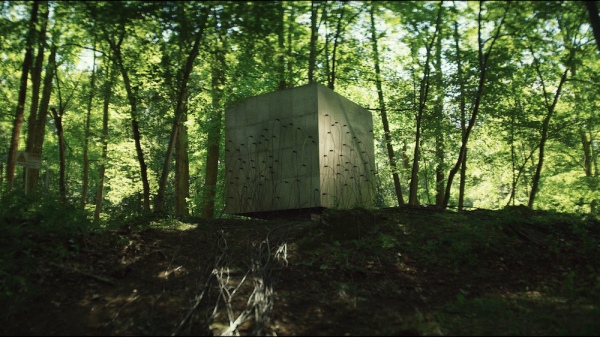
Armed with GPS “Medallions” and carts loaded with cable, hundreds of people crisscross through a forest, laying cable between large metal boxes that run the quantum computing network. With their handheld device, routes are bid on, a pace is set and breaks are handed out infrequently. Ray discovers is he able to make decent money, despite the strenuous work and seems to fall in with the rest of the cabling community, mostly young people setting up camps and sharing conspiracy theories.
Eventually the circumstances through which Ray acquires his medallion come back to haunt him and he finds himself part of a grassroots organization to fight back against the CBLR corporation. I’ll admit that the film starts to lose it’s way in the final act, and perhaps the message is a bit on the nose, but the central performance by Dean Imperial grounds the film and helps to maintain the absurd, DIY tone. The relationship between the fantastic and realistic is really important here and as you grow accustomed to the strange rules of this not-so-distant future you realize that the world we live in is essentially the same.
The social commentary of Ken Loach through the lens of a slacker-indie film like Joel Potrykus’ Buzzard, with a surprisingly effective low-budget science fiction approach; Lapsis is a fun and promising debut and I look forward to whatever Noah Hutton comes up with next.
 Crossing Borders