My Top 20 Films – 2010 – 2019 – #15-11

15

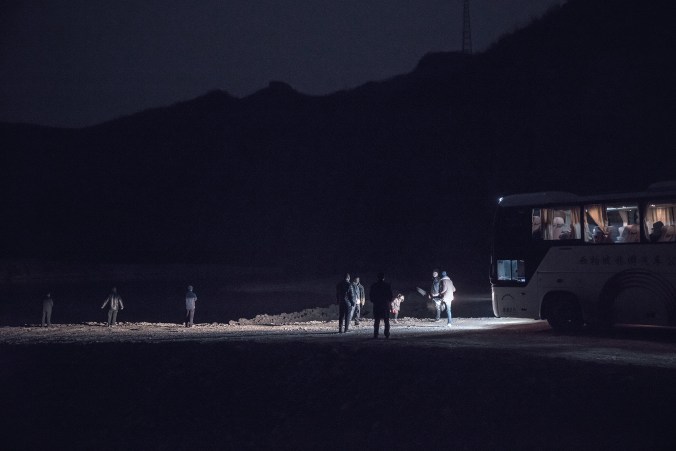
15 – Mountains May Depart – Jia Zhang-Ke – 2015 – China

Here we have another film that serves as a placeholder for a filmmaker’s entire decade of output. The 2010’s, for me, at times can best be defined by the effect that seeing the films of Jia Zhang-Ke has had on me. I have mentioned once earlier about my infatuation with “Taiwanese New Cinema” and this is by way of the films of Jia. I struggled to choose a favourite from Jia’s 2010 output. While A Touch of Sin was my entry point and Ash is Purest White may be his best film of the decade, for me Mountains May Depart was the one that hit hardest. Maybe it’s the epic narrative that spans 26 years starting in 1999. Perhaps it is the look at the effects of globalization through the lens of the emotional distance for the members of a family. Here is a film that fails somewhat in it’s ambition, yet touches me to my core. Why? Because I’m a sucker for movies where people dance.

Many of the themes explored in Mountains May Depart will be familiar to viewers of Jia’s other work. Language barriers, familial estrangement and the erosion of a culture through time and corruption. Many of these themes will show up again as my list continues. Culture and borders has become a large aspect of my life this decade. I met my wife in 2012 and from that moment language became a huge aspect of my life. Cultural barriers and race was present where they weren’t necessarily, before. Shino is from Japan and through getting to know her, living with her family and learning her language and her culture, my entire perspective shifted. Suddenly more than ever before, distance was a constant hurdle in my life. At times because of visa regulations, we lived in separate countries, at times we’ve been in the same room and have had no way to effectively communicate. I see culture, now as a daily aspect of my life, an experience I gain so much from.

Mountains May Depart explores a similar relationship in the form of a mother and her estranged son. Their cultures and world view are so divergent, but we are left with the hope that this gap could eventually be closed. Jia doesn’t go so far as to show that moment happening, but in stead chooses to revisit the opening shot of the film where the protagonist Tao (Played by the director’s wife and constant collaborator Zhao Tao) dances to the Pet Shop Boy’s “Go West.” The image of her, now an elderly woman, full of life’s regrets, weeping and dancing in the snow in front of an ancient pagoda smashes through decades worth of cultural barriers. I was personally shattered.

14.jpg

14 – Moonlight – Barry Jenkins – 2016 – USA

Here is the only film of the decade to win the Oscar for Best Picture that will appear on this list. I generally go into the awards season full of apprehension as all my favourite films are crushed by the same overwrought trash from the same overplayed directors. It didn’t go down the way that Best Picture’s usually do (and should) and in spite of the way the scandal affected Moonlight’s time in the spotlight, the reversal of the Best Picture from La La Land to Moonlight is the most enjoyable moment I’ve ever had watching an awards ceremony. If you have access to the video that was shot that night at my friend’s Oscar party, where in real time the award was given, taken away and finally placed in the rightful hands of Barry Jenkins and co, then you know just how happy I was.

All that bullshit aside, I was devastated by Moonlight on first viewing. The structure was the first thing that struck me. Three defining moments at very different times in a young man’s life. There is an inevitability to much of the film. A sense that this cannot end well. As the boy grows up in impossible surroundings and tries to deal with and accept himself as somebody who does not and cannot fit in, it starts to feel like a happy ending is out of reach. I found the film’s final act to be both a touching, soft look at those barriers breaking, but also a sad realization that it will take more than one choice, one experience to break through the conditioning that comes with being a man in a man’s world.

I have had conversations with a friend who did not find this film to go where it needed to go in terms of it’s intimacy. He expressed feeling hurt by the film’s fear of male sexuality and the treatment of the gay experience. I appreciate his point of view, but for me I didn’t see this film so much as being about homosexuality. Though that was a large theme, I think it was partly used to express something about toxic masculinity and the cycle of violence that it produces, particularly in the African American population. I saw Little as a tragic product of his environment. Not taught enough how to love, taught too often how to fight. That we don’t get to see him completely blossom is not necessarily a flaw, because what does happen opens the door to an entire universe of possibility without having to pin it down to one moment or one experience. I left Moonlight feeling thankful for my loving, accepting family and the open, caring environment that I’ve been lucky enough to live in.

13.jpg

13 – Phoenix – Christian Petzold – 2014 – Germany

I have trouble talking about how much I love Phoenix without mentioning the way it ends. I actually don’t know a huge amount of people who have had the chance to see this film, so I will continue to refrain from doing so, other than to say that this film lands on perhaps the most perfect note of any film this decade. I sat dumbfounded as what I already knew to be true was laid out before me in such a powerful and elegant manner and as the credits rolled, I found myself completely paralyzed. This feeling has never fully gone away.

Phoenix follows Nelly (Nina Hoss), a Jewish lounge singer who survives Auschwitz and returns to Berlin and receives facial reconstruction surgery to repair a gunshot wound. The doctor is unable to make her look the same as she used to, but she is otherwise very beautiful. She reunites with her husband, who does not recognize her, but sees a similarity in her to his supposed late wife. Her husband convinces her to pretend to be his late wife (Herself… I hope I’m not confusing this too much) so that she can collect a large inheritance owed to her.

Petzold excels at this type of historical, cross-genre dramas. His work with Hoss has produced many lovely films and Phoenix may be their strongest collaboration. He has a certain knack of effortlessly playing out the twisty, turny plot with all it’s secrets and reveals and never losing a string or letting the main objective get out of sight. When he finally ties the whole thing up, it’s a delicate, powerful moment of silence, rather than a bang that left me doubled over in emotion.

12

12 – Good Time – Josh and Benny Safdie – 2017 – USA

Alright, let’s get crazy.

If you haven’t seen Good Time and I’ve told you that you should, then what the hell are you waiting for. If you haven’t seen Good Time and I haven’t told you to, then now you’ve been served, get the fuck out there and watch this crazy movie. If not for yourself, then for me.

This aptly named thriller from the Safdie Brothers is a non-stop ride through the chaos of one man’s night on the streets of New York City trying to break his developmentally disabled brother out of jail. There is an energy to this film that bores it’s way into your brain. The buzzing score (Oneohtrix Point Never) and jarring camera work give a sickening feeling of unease and Robert Pattinson’s best performance to date helps to ground this madness, while keeping you riding the edge of your seat.

Fun. Non-stop craziness. There’s a plastic bottle full of liquid LSD, introduced in the best cinematic tangent I’ve ever seen. Good Time is the best example of a low stakes thriller. This kind of slacker cinema usually comes with lazy visuals and a half cooked plot. The Safdie Brothers Never. Let. Up. Good Time is a shot of adrenaline straight to your heart. Good Time isn’t about right or wrong. It is a frenetic nightmare odyssey through New York City that refuses to slow down. When the end finally comes, it lands with such a beautiful and thoughtful grace note, that I can’t help but feel compelled to start the movie again as soon as the credits finish rolling.

11.png

11 – Mad Max: Fury Road – 2015 – USA-Australia

It’s very rare that a film that forgoes emotional depth for visceral thrills wins me over. More often than not I find myself yawning at spectacle films, checking my watch and counting the minutes till the obvious signals that it’s about to end. It’s not that I hate big budgets or special effects, but more often than not they serve to distance me as a viewer, rather than bring me in on the action. Mad Max: Fury Road is the antidote to that problem.

I saw this in an empty theater in Japan with my wife and mother in law. We sat in the third row, but my mother in law chose to sit near the back. I had heard the hype at this point, of course, but had no relationship with the original trilogy of films and was admittedly skeptical. There are times where my skepticism completely poisons a viewing experience, even minutes in, but minutes into Fury Road I had already been slapped upside the head and halfway down my row so many times, I couldn’t count. My wife asked me to stop screaming at the screen. There wasn’t anybody in the theatre, so I didn’t see what the big deal was, but I swear I did my best to stay quiet. Luckily the low end in the soundtrack washed out my constant excited giggling.

Pure visual storytelling. A keen spatial sense. Constant reinvention and a self awareness and understanding of genre trappings and how to subvert expectations. Mad Max: Fury Road is a master class in action film making. This movie will be the bible for the next generation of action directors. The stunts, the effects, the sound all serve the plot and sequencing of the movie.

I’m not gonna lie. This movie is a big silly mess when you break it down into parts. It’s all kinds of too much and as we go through the second half of this list, you’ll really start to see a theme of “Less is More” Before this decade I was much more inclined to feel that I couldn’t get enough “More” and as I progress through my 30’s and find new things to appreciate in life, I’m noticing that I get much more out of the minutiae of every day than I do a balls to the wall thrill ride. Mad Max walks around like it has something important to say and I think the message is mostly empty and dumb, but I appreciate that it doesn’t waste more than a few percent of it’s screen time trying to say it and rather focuses it’s time doing what it does best. High octane and tons of fun without lowering itself for the sake of appeal. I would go to the big box theaters much more often if the marquee movies were more like this.
[20 – 16] [10 – 6] [ 5 – 1 ]

My Top 20 Films – 2010 – 2019 – #20 -16

20

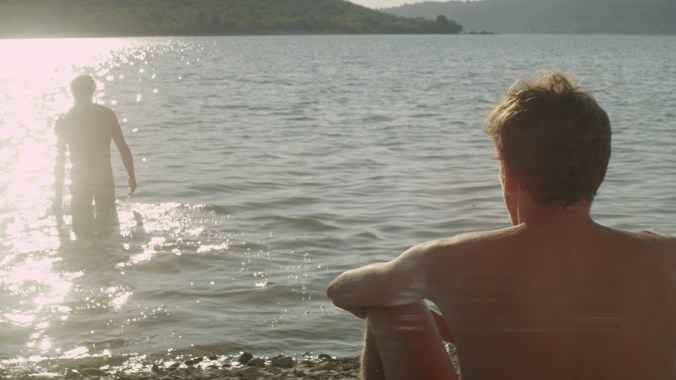
20 – Stranger by the Lake – Alain Guiraudie – 2013 – France

When this film was released, I had heard about the infamous sex scene depicting unsimulated sex between two men. Early in my relationship with my wife, I decided to take her to see this. I think at the time, I wanted to gauge her reaction to something that I knew she hadn’t seen before. I didn’t anticipate that the film would get under my skin in such a powerful way and leave me considering it years later.

Franck frequents a nude beach in France. The beach and surrounding woods serve as a popular area for gay men to meet and hook up. Eventually he meets Michel and is instantly infatuated. He takes to watching the man and his lover and one evening witnesses Michel drowning the other man in the lake. This moment does nothing to lessen Francks attraction to Michel and he continues to pursue him despite the inherent danger.

A sexy and slow-burning thriller that uses suggestion to explore uncertainty and fear that comes along with being a sexually active gay man. We know Franck is aware of the risks he takes pursuing Michel, but the film does him the service of never questioning what force drives him towards this danger, but rather that it is a force and it is irresistible. When the intimate scene finally arrives, the stakes are so high and the tension so tightly wired, there isn’t a single moment of it that feels gratuitous or pornographic. This was one of those films I grew to love as the years went on for what it manages to say while attempting to say so little. Queer cinema to the bone, lacking in exploitation or melodrama.

19

19 – Tangerine – Sean Baker – 2015 – USA

If you heard about Tangerine when it was making the festival rounds, you likely would have heard about how it was shot on an iPhone on a shoestring budget, or perhaps that it started two transgendered actresses in their first roles. I wasn’t sure what to expect going in, but within seconds I was arrested by the incredible energy. Tangerine plays out to such a fast paced, chaotic rhythm, that makes it impossible to look away. More of a roller coaster than a train wreck, we follow Sin-Dee Rella on her first day out from a 4 week prison sentence. She meets up with her friend Alexandra and the two embark on a quest around blazing hot Hollywood to catch Sin-Dee’s pimp/boyfriend cheating on her.

The 2010’s have been full of conversations about inclusivity in Hollywood films. With Tangerine, Sean Baker completely blows this debate up by casting two non-professional actresses who deliver an energy and authenticity to their performances and avoid descending into caricature. Somehow Tangerine manages to be endlessly engaging, funny and breathtaking without trying to make some clean cut statement about it’s subject or to wrap things up to make things palatable for a wider audience, yet what is most stunning about Tangerine is its warm heart. For a film that starts at such a breakneck speed, the most significant moment comes when things finally stop and, in a late night laundromat, our heroes come together in silence and the act of sharing a wig seems to close a divide that Hollywood would rather pretend doesn’t exist. An authentic and valid experience that needs to be seen.


18

18 – Spring Breakers – Harmony Korine – 2012 – USA

I know as many people who hate this movie as I know people who love this movie. I came into this a considerable fan of Korine’s work. I grew up with Kids. His directorial debut Gummo was an early instance of me dealing with a piece that upset me so much it made me angry. Over time, I grew to love Gummo and appreciate it as the hilarious shockstravaganza that it is. By the time Spring Breakers was announced, with the Mickey Mouse Club cast and the day-glo, Girls Gone Wild aesthetic, I knew this would be more than it appeared on the surface.

Shino and I saw Spring Breakers on opening night in a theater packed with teenagers. I snickered in private, thinking that these kids had no idea what they were getting themselves into. In reality, Korine gave them exactly what they came for. Tits, Dubstep, Booze, Guns, Drugs, Numchuks (sp) and James Franco doing a pitch perfect impression of dirtbag Texas rapper Riff Raff. Is there something deeper being said here about a generation dedicated to empty, mindless partying? Probably, but more than every other film on this list, Spring Breakers appeals to me because it is unapologetic, senseless, remorseless fun. Rather than pointing his finger and looking down at the youth of this decade, Harmony Korine rips his shirt off and stage dives directly into the mosh pit.

Harmony Korine is incredibly gifted in the art of Idiot Poetry. He co-opts the worst elements and vocabulary of a subculture and spits it back at us in a way that heightens it; in a way that makes it profound. There’s something to be said about a film that has me giggling with excitement over a monologue about drugs, money, guns and shorts and moments later has me tearing up to a Britney Spears song replete with a machine gun ballet and pink ski-masks. I refuse to sell this film short. When people raise their eyebrows at my mentioning Spring Breakers I am only inspired to double down and explain in the most grand of statements just why I believe this is a defining work of this decade. Spring Breakers is the distilled essence of what it meant to be young and dumb in the early 2010s. I have and will continue to revisit many times.

17

17 – An Elephant Sitting Still – Hu Bo – China – 2018

A work of such incredible scope and despair, it is impossible to talk about it without bringing up the tragedy that we will never receive a follow-up, as the director commited suicide shortly after completing this, his debut feature film. That this element is usually front loaded in the press for the movie is no surprise, as it serves to set the table for the type of experience that watching An Elephant Sitting Still can be.

There are few films in the history of cinema that so precisely inform a feeling of hopelessness as this one. On top of that, the film is 4 hours long. There isn’t a moment in the entire running time of An Elephant Sitting Still that offers an olive branch or even a fractal of light to pour through the cracks. We follow the four main characters on their descent into desperation and watch as they give up under the oppression of their circumstances. The setting of Manzhouli in Norther China serves as an impossible hurdle in the way of the protagonists. An old man being offloaded by his children, a younger man wracked with guilt over the suicide of his friend, a teen boy trying to escape an endless cycle of bullying and a teenage girl who leaves home and begins a relationship with an official at her school.

This film could not have been made anywhere other than China. The difficulties involved to produce a piece like this and the kind of environment that is required to create this world view are perfectly in line with the kind of isolation that is so commonplace there. Chinese film has become one of the most important sections of cinema for me in the past decade. Through some of the greater examples from the “6th Generation” of Chinese cinema, I have discovered the masters of “New Taiwanese Cinema” and a beautiful new film language that speaks to me in a way I hadn’t previously experienced. In many ways An Elephant Sitting Still shares ground with some of those other examples of great Chinese Language Cinema. It also stands on it’s own as the most upsetting portrait of social despair that has ever been made.

I know it’s a lot to ask you to watch a depressing 4 hour Chinese movie. The final thing I will note about this film is that it flies by at a terrific pace. There are few moments to contemplate what has just happened before another card is balanced on top and before you know it, the whole thing gives way. Groundbreaking and final. The work of a Master who was not to be.

16

16 – The Lobster – Yorgos Lanthimos – 2015 – UK

This marks the first film in this list that was in conflict with another film by the same director. Even as writing this, I m not sure why I would choose this over 2018’s The Favourite. The Lobster was in many ways my favourite film of 2015, but it is not the highest ranked on this list from that year, either. I remember back to 2009 when I saw Lanthimos’ second feature Dogtooth and it was instantly apparent that I had witnessed the work of somebody who would go onto do something truly spectacular. I didn’t realize just how far that would go on to be true, until learning that he was set to produce his first English language film with a flawless who’s-who cast and a considerable amount of foreign money. Now the question was would the Greek guy be able to translate his particular film language into something that would work in English and would the budget enable him to achieve his vision or get in the way of it? Many filmmakers have made this transition only to flee back to their home countries to rework their new skills into a more succinct and effective piece in their native language (Bong Joon-ho, Park Chan-Wook, Florian Henckel von Donnersmarck all spring to mind). With The Lobster, Yorgos Lanthimos makes the case that film transcends spoken language and speaks to universal truths without losing what makes his films distinctly greek.

A fable about a man who goes to a hotel after his wife leaves him for someone else. He lives in a world where being single is not an option and is given 45 days to find a new mate or he will be turned into an animal of his choosing. He chooses a Lobster because they live long, fertile lives and he has a love for the sea. The conditions at the hotel aren’t exactly optimal for nurturing a romantic relationship, and the people in this world are so disassociated that they see things like mutual constant nosebleeds to be a signal that the two should mate. The fact that one of these people secretly smashes their own nose doesnt feel sad, but necessary. When love shows up, it is practical, and unromantic and yet by the end of the film seems like something worth sacrificing everything for.

Lanthimos’ trademark wooden, to-the-point dialogue is a treat to listen to. He has gone on to make two more English films. The Killing of a Sacred Deer, which I love, in spite of it’s ridiculousness and The Favourite, which is Lanthimos at his best. Where that film grounds itself in history and three incredible performances, I chose to place The Lobster here, in stead, because I think it is a better representation of what makes Yorgos’ films so much fun to watch. I think The Favourite is a better movie, but The Lobster lays the groundwork and has set the stage for so many more wildly inventive films to come.


[15 – 11]    [10 – 6]    [5 – 1]