VIFF Day 8 – Capsule Reviews

MV5BZWM1MWRhZjQtZjljZC00ZTNmLWI4M2UtMWVmNmUyNjhlYTVhL2ltYWdlXkEyXkFqcGdeQXVyNjI0NTQ2Nw@@._V1_SX1777_CR0,0,1777,744_AL_

Bad Day for the Cut – Ireland – Chris Baugh

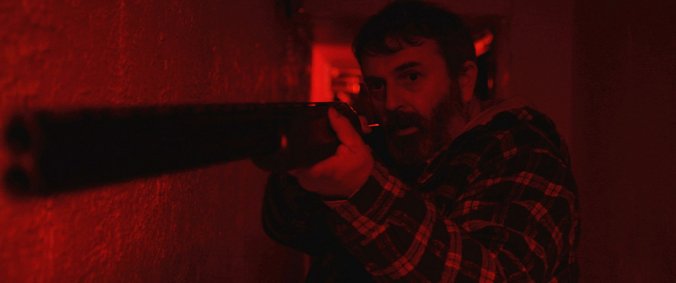
A middle-aged farmer seeks revenge in the feature debut from Chris Baugh. A slow-boil genre film with some brutal instances of violence throughout. The comparisons to Jeremy Saulnier’s Blue Ruin are unavoidable, and while this film doesn’t do anything particularly new, it’s the details that count. Donal’s mother is murdered and when the people responsible send muscle to kill him, he turns the tables and makes his way to the top with the help of one of his attackers. The details behind the murder of his mother and fantastic comedic timing in its action scenes strengthen a sometimes predictable affair. Not sure how accessible this film will be, but a great choice for people who like high tension revenge thrillers.

MV5BYTdlZTMyNTQtODRlZC00OGY0LWFmZTAtZjRmMWUyNTRhMGVlXkEyXkFqcGdeQXVyNTI5MTAyMzU@._V1_

7 Minutes – Italy/Switzerland/France – Michele Placido

A group of women are workers’ representatives at a textile factory that is being sold to a French corporation. If they want to keep their jobs, they have to agree to losing 7 minutes from their 15 minute lunch breaks. The 11 women argue the issue, many of them swaying back and forth. Based on a play that is based on true events, this single space drama is a crowd-pleaser that unfortunately did not work for me. The broadcasted performances, cloying soundtrack and obvious story arc left me feeling cold and disinterested by the close. The characters all take turns explaining their case, each of them hitting on some important issue or subsection in Italian culture. By the time the pregnant woman goes into labour, I was rolling my eyes and checking my clock. That isn’t a spoiler; you can see the plot point coming five minutes in. I can imagine that many people would like this one. The myriad of themes will hit home for somebody.

images-w1400

Good Manners – Brazil – Juliana Rojas, Marco Dutra

Oh maaan! There are so many things to like about this movie! And then there is the second half which falls to pieces and features one of the worst child performances I’ve seen in years. A genre bending werewolf movie with a gorgeous colour palette and some stylistic musical touches that are surprising and delightful. Clara (Isabél Zuaa) is hired as a nanny by the 2-month pregnant Ana (Marjorie Estiano). During a full moon, Clara finds Ana sleepwalking, eyes bright yellow, eating meat out of the fridge. Ana’s bump grows at a high rate and her sleepwalking continues every month. The bond between the woman grows and when the baby is finally born, a particularly gruesome scene, Clara is forced to take up a role as parent to the… child. Along the way we get low-key musical numbers. No dancing, just singing and music. If only there were more of that and less of what comes in the second half as the directors fall into every genre pitfall on the way to what could be a satisfying ending that is marred by lousy CG and badly directed child actors. I always say that the sign of a great director is somebody who can make kids give great performances. Here we have two directors and neither seems to have any idea what to do with this boy. In stead they give him way too much to do and too little help to complete the illusion. I honestly felt bad watching this. So much promise and ambition, but an unfortunate conclusion. Horror fans should check this out for the hilarious and twisted birth scene in the middle.
VIFF 2017 – Day 7 – In The Fade

in_the_fade_2_h_2017.jpg

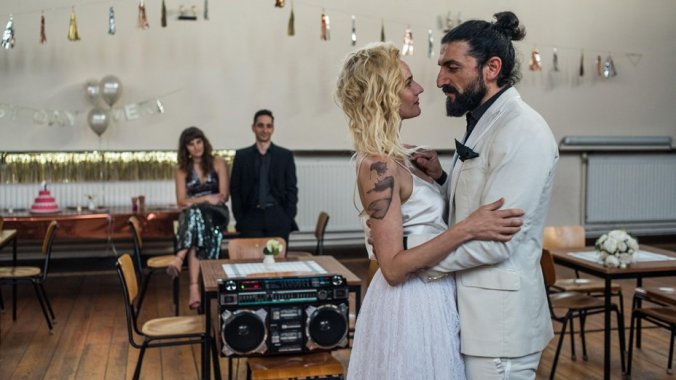
Diane Kruger won a very deserved Best Actress award at Cannes this year for her role as a woman fighting for justice after losing her family to a terrorist attack. Director, Fatih Akin, tells a somewhat uneven, but ultimately satisfying story of a grieving wife and mother.

The film opens in a prison block. The inmates are out of their cells and cheering. Nuri (Numan Acar) emerges from a cell, dressed in a white tuxedo and is removed from the celebratory crowd and taken to a large room set up for his wedding. Katja (Kreuger) and Nuri get married and we fast forward 6 years. They now have a kid, and Nuri is thriving post rehabilitation. No longer a drug dealer, he helps convicts find their footing when returning to society. One day Katja leaves their son with Nuri at his office to run errands. When she returns, the block is closed off with police tape. She makes her way past a police officer and only gets close enough to see the office has blown up before she is dragged to the pavement and handcuffed.

Akin tells his film in three parts. The first part depicts the immediate aftermath of the attack. Katja is passed through the system and treated unfairly, because of her husband’s past. She descends into a depression; taking whatever drug she can find. It all becomes too much for her, but there is a breakthrough in the case just as she makes the decision to end her life. The second and third parts follow Katja’s crusade for justice against a stone cold pair of Neo-Nazis and I was pleasantly surprised at where the film goes from there.

That isn’t to say that In The Fade is all that surprising, or even original. It really isn’t. Revenge films are a dime a dozen. I must have seen three or four in the first half of the festival. In the Fade is a good example of the revenge film. Akin manages to play directly into the conventions of the genre, but still maintains tension despite the inevitability of the plot. Diane Kreuger’s performance is key here and the main reason the film is elevated above a simple genre flick. Katja’s nihilistic descent in the films first half is absolutely believable solely because Kreuger’s performance is so grounded and honest.

I’m enamored with the closing credits of this film. After an incendiary ending that leaves no stone unturned, the camera spins up into the sky and lands on the water, zooming in slowly, we see the sunlight dance in wisps on the ocean floor. I was mesmerized and watched every second. Stunned and satisfied. A perfect way to close.

VIFF 2017 – Day 6 – Happy End

MV5BMTYzMzgwMzgyMV5BMl5BanBnXkFtZTgwNzI0NzMzMjI@._V1_UY1200_CR126,0,630,1200_AL_

Michael Haneke is one of our greatest living filmmakers. A true master of the form. Two-time Palme D’or winner. What a rush to see him open his newest film with the greatest sin in the history of recorded video: the dreaded vertical video. I’m even hesitant to include the poster I’ve included for this review. The aspect ratio just doesn’t feel right, but Haneke is a master and when he breaks a rule, he breaks it for a reason. The opening sequence made up of four cell phone shots with narration in text from whoever is filming is an absolutely haunting opening that calls back to earlier Haneke films such as Benny’s Video and Cache, but here we are given a modern twist.

The comparisons to earlier Haneke don’t stop there. He is still torturing the bourgeoisie and tearing away at upper-class families and their white guilt. There even seems to be a direct reference to Haneke’s previous film, Amour, almost implying that this is a sequel of sorts. The title implies that you are in for an easier experience than in Amour, but this is a Haneke film and we have to assume the title of the film is somewhat ironic, right? This is the director who made the horrific film Funny Games after all. I won’t spoil the accuracy of the title, but I will say that this is the first Haneke film I’ve seen where the closing credits were met with applause AND laughter.

Happy End follows the Laurent family. Twelve-year old Eve (Fantine Harduin) moves in with her father, Thomas, (Matthieu Kassovitz) after her mom is sent to the hospital from a pill overdose. She is despondent and disconnected and it is obvious she harbours some darkness beneath the surface. Thomas is married and has a new son. When we first see him, it is through the lens of a cellphone and after the opening, it is immediately disquieting. We learn through a series of kinky facebook messages that Thomas is having an affair.

A disaster on a construction site belonging to the family’s firm is found to be caused by neglect and Thomas’ sister, Anne, (Isabelle Huppert) deals with the fallout as the acting CEO. The former boss, their father, Georges (Jean-Louis Trintignant) is now bound to a wheelchair, having given up the reins to his company years before when his wife fell ill. Now widowed, he seems desperate for a way out. It seems he finds his match in the family’s new addition. The performances here are all strong. A scene where Georges tells Eve about the death of her grandmother is a brilliant moment of child acting that calls back to the best scenes in The White Ribbon.

It seems easy to write Happy End off as a retread of Haneke. He explored youth disaffected by media to the point of violence in Benny’s Video (1992), but the update is timely. In the past year we have seen multiple cases of horrible murders, assaults, attacks streamed on social media platforms. Haneke uses these new virtual tools to outstanding effect, building tension and causing unease due to the audience’s familiarity with the platform. I honestly don’t think anyone has presented Facebook live or messenger in such an engaging and cinematic way before. Haneke is 75 and he is fluent in the technological language of modern children.

The plot jumps from time to time, skipping over huge events and Haneke’s sadistic habit of withholding information and emotion continues. There are some lovely surprises near the end, but not where you would be expecting them. The tension builds to a crescendo that never arrives and there would be a feeling of anti-climax if not for a final shot, again with the vertical framing, that puts a lovely, ironic bow on the otherwise bleak experience. This may not be as great as The White Ribbon or as devastating as Amour, but I enjoyed the film very much and look forward to a second viewing.

VIFF Day 5 – The Killing of a Sacred Deer

the-killing-of-a-sacred-deer-1300x799

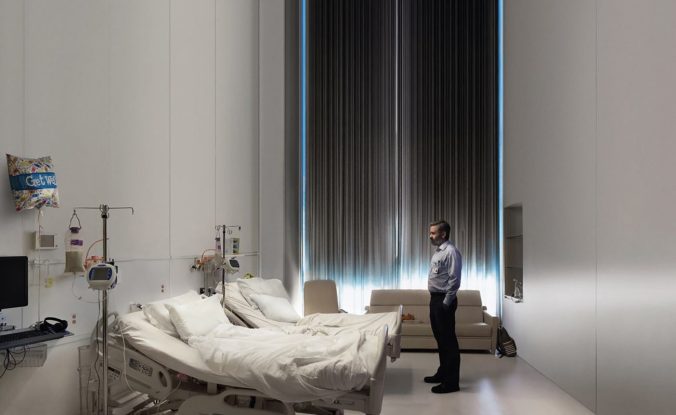
Yorgos Lanthimos’ new film opens with a disturbing image of open-heart surgery. The tone is set immediately. High pitched strings sound-off sporadically and continue to do so throughout. The Killing of a Sacred Deer is more of a drama than a horror film, but it is impossible to ignore the overwhelming sense of dread.

The past decade has been a difficult one for the debt-ridden Greece. In spite of, or maybe because of this, we have seen a strong group of Greek filmmakers emerge to tell powerful, original stories. Yorgos Lanthimos has stood out from the start. His first feature to reach international screens was 2009’s Dogtooth. His brand of bleak comedy was refreshing. Yorgos asked his actors to do shocking acts and they comply fully. He views them with a cold distance that reminded me of Roy Andersson’s Songs From the Second Floor. 

It was clear that Lanthimos was a bold new voice in cinema. The Killing of a Sacred Deer is his second English language film and Lanthimos has changed very little in terms of style. Stephen (Colin Farrell) is a heart surgeon. He speaks in straightforward, matter of fact sentences. The cadence is similar to how Farrell spoke in his previous collaboration with the director The Lobster. In a post-surgery conversation with his anesthesiologist, he asks about his co-workers watch, specifically how many meters the waterproofing will work. He rationally explains why he prefers a metal strap to a leather strap. Small talk is boiled down to something even more inane that real life.

The emotionally stifled world of Lobster seemed to influence the way everyone talks. In Sacred Deer it feels as if his way of speaking has had an influence on the people around him. His wife (Nicole Kidman) speaks in a similar tone. Rather than making rational statements, though, she asks questions. Stripping off her clothes and standing bedside she asks her husband “General anesthesia?” “General anesthesia,” he replies and she lies down on the end of the bed, splaying her arms out above her head. Stephen begins to touch her before we cut back to him walking the halls of the hospital.

Stephen meets many times with a teenage boy named Martin (Barry Keoghan) and they talk. Stephen buys him a watch. Invites him for dinner with his family. The precise reasons why Stephen invites this boy into his home and the outcome once the boy’s presence becomes intrusive are the driving plot points of the film, so I will try not to reveal too much. Stephen’s daughter, Kim, (Raffey Cassidy) develops a crush on Martin. His son, Bob (Sunny Suljic) falls ill and for some inexplicable reason loses the ability to walk. An ultimatum is given with dire consequences. We are faced with an impossible choice.

I hesitate to say too much about this film. Characters in a Lanthimos movie behave in irrational and extreme ways. What seems funny and offbeat at first becomes normalized by the end. The audience laughter through the first act of my sold out screening quieted to a hush of uncomfortable giggles by the end. The banal small talk turns into desperate conversations about life and death; the vocal patterns do not change. One character says outright after a particularly horrible moment, “It’s metaphorical,” and it’s a sadistic wink from the director as you scramble to try and figure out –  A metaphor for what!?

It’s hard to ignore the financial situation in Greece when reading a Lanthimos film. I also wonder if there are references to the bible. The unstoppable nature of the evil the family is up against and the way they seem to accept their fate, as if it was destined, cause me to think there could be supernatural elements involved. Maybe there is no metaphor. Perhaps the highly stylized dialogue is a smokescreen and this world is in fact our world and these are just normal people in a horrible situation.

Strong performances by all the central characters. An incessant feeling of dread throughout. Laugh-out-loud comedic moments and gasp-worthy shocks. The most disgusting spaghetti scene since Gummo. The Killing of a Sacred Deer has it all! This is not a film for everyone. Some people will cringe at the dialogue, fail to take the film seriously and write it off as pretentious trash. For me, I revel in the chance to see something I’ve never seen before. Lanthimos is nothing if not original and this film is a huge step in the right direction. I understand his next film is an historical drama and the first film that he will not be writing himself. I’m extremely curious to see how that will play out. This has been a difficult review to write, my brain has been spinning since I saw this film and I don’t think I’ve done it justice. A Yorgos Lanthimos movie is a beautiful, twisted puzzle and always a treat to try and unpack.

VIFF Day 5 – 120 Beats Per Minute (BPM)

120-BPM-1000x600

What could be worse? An invisible virus for which there is no cure. Your body’s ability to fight disease is lost. Death is inevitable, as the search for a cure is tied up in pharmaceutical purgatory. Moments of intimacy become dangerous. Nobody seems to care that you and your friends are dying. Perhaps the only thing worse than being sick is being healthy and watching everyone you love slowly waste away.

Director, Robin Campillo and co-writer Philippe Mangeot draw  from their own experiences in the 90’s as activists for AIDS awareness with the group ACT UP PARIS. Having lived through the situation, Campillo requires little-to-no research in conjuring up an authentic and personal story about an important and harrowing time in LGBTQ history.

BPM bears some resemblance to another film written by Campillo, The Class, the 2008 Palme D’or winner about political and social unrest in a Parisian middle school. Much of BPM takes place at ACT UP’s weekly meetings, where a cast of talented, young, French actors debate and discuss their plans for peaceful protest against a pharm corporation that is delaying the findings of a study on a new AIDS drug. Campillo cuts back and forth between the protests and the discussion. Amidst snapping fingers and hisses, they argue about how best to move forward. The energy in the room is consistently electric and I began to feel immersed in this small world.

Nathan (Arnaud Valois) is a new recruit to the group and one of the only gay men who isn’t HIV positive. He begins a relationship with Sean, (a superb performance by Nahuel Pérez Biscayart) an outspoken and passionate young man who has been Positive for a couple years. Their courtship takes place in a night club, the flashing lights and mess of bodies fades out of focus and we in stead watch the sparkling dust particles flying through the air, shining in the bright strobes. We see an infected cell. At home the men make love and discuss their sexual history. Sean tells Nathan how he got infected, Nathan tells him of a close call with a lover who became ill.

Despite the foreboding presence of death and the outrage directed at capitalist pharmaceutical manufacturers, BPM is a joyous celebration of life. The love and affection that is shared by the activists, their excitement and nervousness as they stage a potentially dangerous protest and the inevitable mourning that comes when another in their number succumbs to the diesease, paints a picture of a close-knit family bound together by a mutual cause and a fatal, ticking clock.

The film is long. 144 minutes. Somehow the cast is able to hold your attention without changing the debate/protest formula throughout. As the film reaches a conclusion, we are left with a deeply personal story about saying goodbye to a loved one. Again Campillo apparently draws from personal experience here and it’s hard not to feel the heartache and gratitude that he is dealing with. This is a film about protest though, and a shot of the Seine river red with blood is a powerful, sobering image. A delightful, crowd-pleasing film and an informative look into a real episode in our recent history. Great stuff.

VIFF Day 5 – A Fantastic Woman

UMF_5n-2000-2000-1125-1125-crop-fill

Identity politics and red tape get in the way of a woman’s right to say goodbye to her deceased lover in Sebastián Lelio’s Chilean drama. Winner of a Silver Bear for screenplay at Berlin and featuring a breakthrough performance by Daniela Vega, Lelio’s colourful film is brutally honest and unflinching.

The film opens with a powerful image of a waterfall. The shot of the raging water kicking up mist slowly dissolves to a shot of a men’s steam room bathed in red LED light. The sudden blast of colour as the light slowly changes from red to purple to blue is intoxicating. A middle aged man, Orlando, leaves the steam room and heads out to meet with his lover, Marina, (Vega) as she finishes her evening gig singing in a club. The two have a night of romance, dinner, drinks, sex, and then in the middle of the night Orlando wakes up feeling lightheaded. On their way out of the building he falls down the stairs. At the hospital, Marina is eventually informed that Orlando has died.

Marina is a transgender woman. The sudden tragedy ignites a series of events where we see her stripped of her basic human rights. The bulk of the film follows Marina as she is routinely questioned, examined and prevented from mourning the death of her lover. Orlando’s ex-wife and son treat her with disgust. They order her to leave Orlando’s apartment, taking away his dog, Diabla, which Marina claims Orlando had given to her. Marina is told in no uncertain terms that she is not to be at Orlando’s wake or funeral. The police harass Marina, asking invasive questions and forcing her to undergo an embarassing physical examination.

There have been a few films in recent years about Transgender characters. In Hollywood, you’re likely to see these characters played by men pretending to be women. Like 2015’s outstanding Tangerine, Lelio casts a talented trans actor in the lead role and the effect is personal and authentic. When a police officer refuses to refer to Marina by her name and instead calls her “Daniel,” you can see the pain it causes in Marina’s eyes. She doesn’t have to show us. It’s already there. It’s been there her whole life. Her brave, honest performance is a gift to those of us lucky to never have to deal with this kind of prejudice.

There is a scene later in the film where A Fantastic Woman appears to take a hard left turn, but the brutal scene is thankfully the beginning and ending of the physical violence in the film. Lelio reminds us of the danger that exists without having to sink to exploitation or sensation. The script does take some easy outs, but the focus remains on Marina and her against-all-odds grace as she navigates through her grief. Another image of her walking down a street into a powerful wind, she fights against it, but is eventually planted in place, leaning forward, it looks as if she might blow away, but she stands strong.

Lelio’s previous film Gloria was also a huge hit at VIFF a few years ago. The Chilean is releasing two films in 2017, the second in English under the title Disobedience.  His momentum and tasteful use of colour and magic realism in Fantastic Woman in the service of telling a simple character study, tells me that we are in for some interesting films in the future.

VIFF 2017 – Day 4 – Loveless

maxresdefault (3)

The bitter ending of a marriage and a search for a missing child prove fertile ground for scathing social commentary in Andrey Zvyagintsev’s haunting Loveless. No stranger to criticizing Russian society, it is a wonder that Zvyagintsev has been able to produce the films he makes on home soil. A cursory look at the opening credits shows a lot of financing coming from France and Germany. This international funding approach also shows in Zvyagintsev’s tone. Tarkovsky, Bergman and Haneke all show up in Zvyagintsev’s work.

The film opens on Alyosha, a shy and quiet 12-year-old boy as he walks home through a Russian winter. Back at home, he is treated with indifference by his mother, Zhenya. She talks to him like an adult that she doesn’t particularly like. Distant and cold. Her husband, Boris, arrives home from work and within minutes the parents are fighting. A particularly brutal war of words unfolds and the adults speak freely about their relationship and their child, thinking their son has gone to sleep. The moment we finally see that he has been listening is devastating in its quiet horror, as we watch the very talented child actor’s face contort under a stream of tears. A truly painful moment.

The couple are well into the end of their marriage. Both involved in extramarital affairs, Zhenya with an older, well-off man and Boris with a younger, very pregnant woman. They are both looking for ways out of their marriage, but are fighting against external factors: particularly Boris’ job. Boris’ boss is an extremely conservative Christian. Boris hears from a co-worker of another employee hiring a woman to pretend to be his wife at a Christmas party for fear of being fired if exposed as a divorcee.

This isn’t a spoiler, as it’s part of any synopsis released of Loveless, but halfway into the film Alyosha goes missing. It is unclear where he’s gone or why he left. We spend the rest of the film following the couple as they exhaust all available means to try and find their son. A filmmaker with less to say would use this situation as an opportunity to bring the warring couple back together. Zvyagintsev chooses to present an absolutely irreparable rift and allows the characters to be unlikable and self centered, perhaps never learning any lessons from the experience.

This film is no different from the director’s previous in terms of the outrage directed towards the Russian ruling and middle class. Orthodoxy casts a shadow over the marital struggles. Constricting bureaucracy gets in the way of finding Alyosha. Zhenya seems to live two lives, as she speaks in horrible ways about her son to a co-worker, pausing for a moment to snap one of many selfies, but is suddenly thrust into the role of the worried mother without necessarily knowing why or how to emulate.

This is not a film about closure. The child missing is not so much a plot point as it is a mirror for the unlikable and self-absorbed parents. Zvyagintsev offers no answers or catharsis, but rather a black, tangled mess not unlike the images of bare branched birch trees that fill the frames of Loveless. Zvyagintsev has employed the image of tree branch silhouettes before. Like the image, there are echoes from Zvyagintsev’s previous films. Leviathan’s disdain for Christianity and stifling beurocracy, Elena’s stark depiction of love and marriage and The Return’s story about estranged family all appear in Loveless. 

Bleak, angry and quietly enthralling, Loveless  is another in a string of assured and confident films from the Russian master. Five features in and no sign of slowing down, the future is bright for Andrey Zvyagintsev, even if his films might lead you to feel differently. We have a master craftsman working at the top of his game in difficult circumstances. A reason for celebration, indeed.

VIFF 2017 – Day 3 – Capsule Reviews

A few short reviews to catch up.

maxresdefault (2).jpg

The Square – Reuben Ostlund – Sweden

A laugh-out-loud satire of the modern art world. Acerbic and outrageous. A deserved winner of this years Palme D’or. The curator for a huge museum in Stockholm is pickpocketed in the days leading up to a huge exhibition. His mission to recover his lost items distracts from his work and his world begins to crumble. There are plenty of sequences that feel funny and dangerous at the same time. Claes Bang, who plays Christian the curator is suave and confident, but the world he lives and works in is so convoluted and hypocritical. The scene in the photo above is a real adventure, but my favourite sequence comes earlier, when Christian and an employee devise a scheme to get his phone back. Driving to a low-income neighbourhood where the phone was traced to, they play a track by Justice to hype themselves up. The boys trying to be men energy calls back to Ostlund’s last film Force Majeure. This is a real treat of a film and I have much more to say about it. I will revisit it with a longer review later this year.

anarchist-from-colony_thumbnail_1560x872

Anarchist From the Colony – Lee Joon-Ik – Korea

A historical dramedy about Park Yeol, a Korean activist in Imperial Japan and his partner, Fumiko Kaneko, a Japanese born Korean who helped Park to bring attention to the massacre of Koreans after the Kanto earthquake of 1923. This is a slow film that isn’t helped by it’s strange, light-hearted first act. By the time you get to the meat of the story, the film has already presented itself as a broad Korean comedy, down to the crammed in love story. Lee Joon-Ik earns some of this back by the end with some sentimental speeches and conversations. Lee Je-Hoon is electric in the lead role and really fun to watch. His counterpart, Choi Hee-Seo is not my cup of tea. Mugging and gesturing in a way you only see in historical Korean dramas. Not a bad movie, but with a mostly Korean cast speaking mostly in Japanese (I know because I could understand what they were saying without subtitles. Native speakers are way too fast for me) and some cloying nationalistic sequences at the end, I’m left feeling like Anarchist From the Colony plays a lot better on home shores than it does over here.

Okja

Okja – Bong Joon-Ho – Korea/USA

Recently released on Netflix, I went to see Okja a second time in the hopes of seeing Director Bong in person. Alas, his broken ankle kept him in Korea and we had to make do with a Skype Q&A. The Q&A focused mostly on the role of CG in the film. Particularly the techniques used to help connect the film’s star Ahn Seo-Hyun to her animated counterpart Okja. We are left with a touching story about family. A young girl does extraordinary things to save her best friend. A lesser filmmaker would be distracted by his creation. He would spend all too much time showing off and would lose sight of his story. Bong Joon-Ho is a humanist filmmaker and tells his stories through the characters, not the set pieces. There are some fantastic chase sequences and destructive action scenes, but the really important effects focus on intimate moments. Touch. An embrace. There are some false line-readings that I assume come from translation problems, but Bong’s deft use of slapstick and dark comedy mix perfectly with the exciting and sentimental scenes that are expected in a film like this. Bong Joon-Ho is a filmmaker with impressive momentum. The most successful of his contemporaries to make a film in English. For a director that relies on genre, his films are consistently fantastic and affecting. He asked us to consider his films up to now to be his “Early work” and I fully trust that we have decades of growth and more near-perfect films ahead.

Tomorrow I will be seeing two films in the evening. Expect a review for Zvygintsev’s Loveless by Monday.